What size house is considered a mansion? It is a question more people ask than you might think.
I have wondered the same thing while browsing luxury real estate listings online.
Some homes look massive but still do not carry the mansion label, and that gap always made me curious about what the real standard is.
In this guide, I will walk you through the exact square footage, room counts, and features that separate a mansion from a large home.
I will also cover how location and amenities play a role in the final judgment. By the end, you will know exactly what makes a home qualify as a true mansion.
What Size House Is Considered a Mansion?
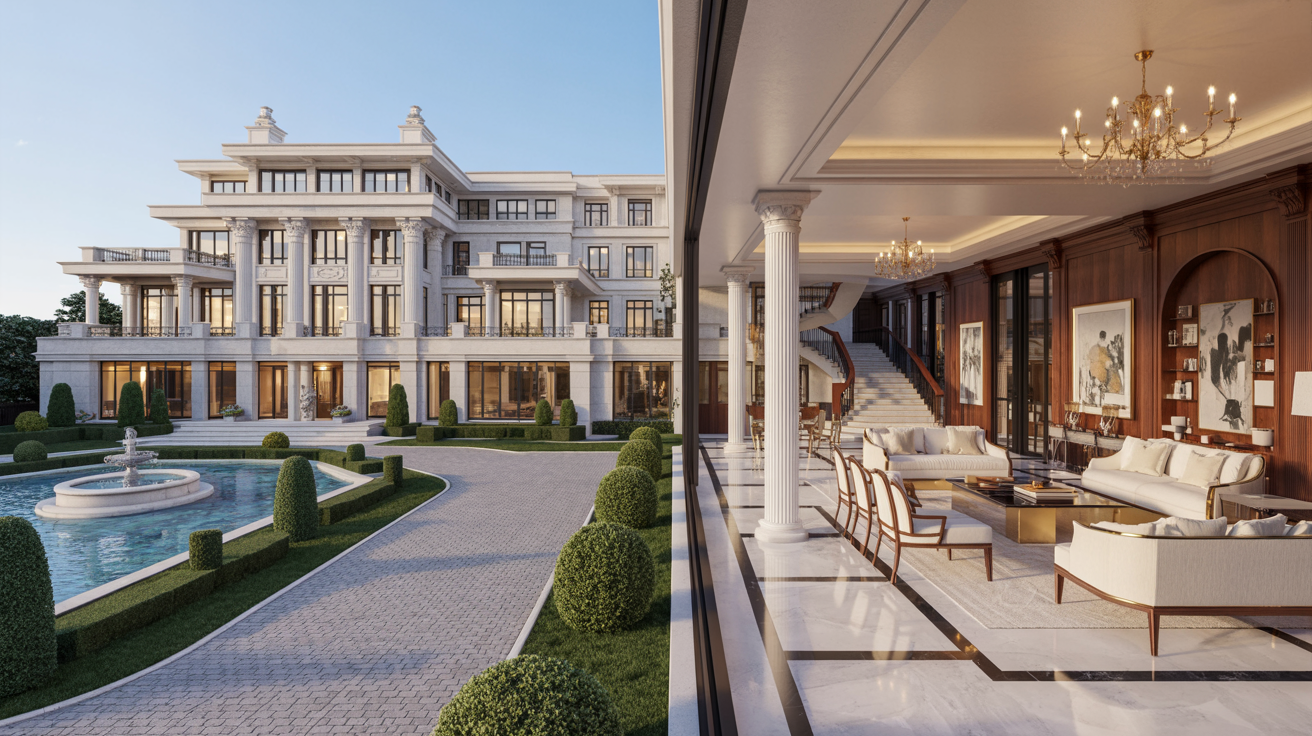
Size is the starting point, but it is not the only factor that puts a home in the mansion category.
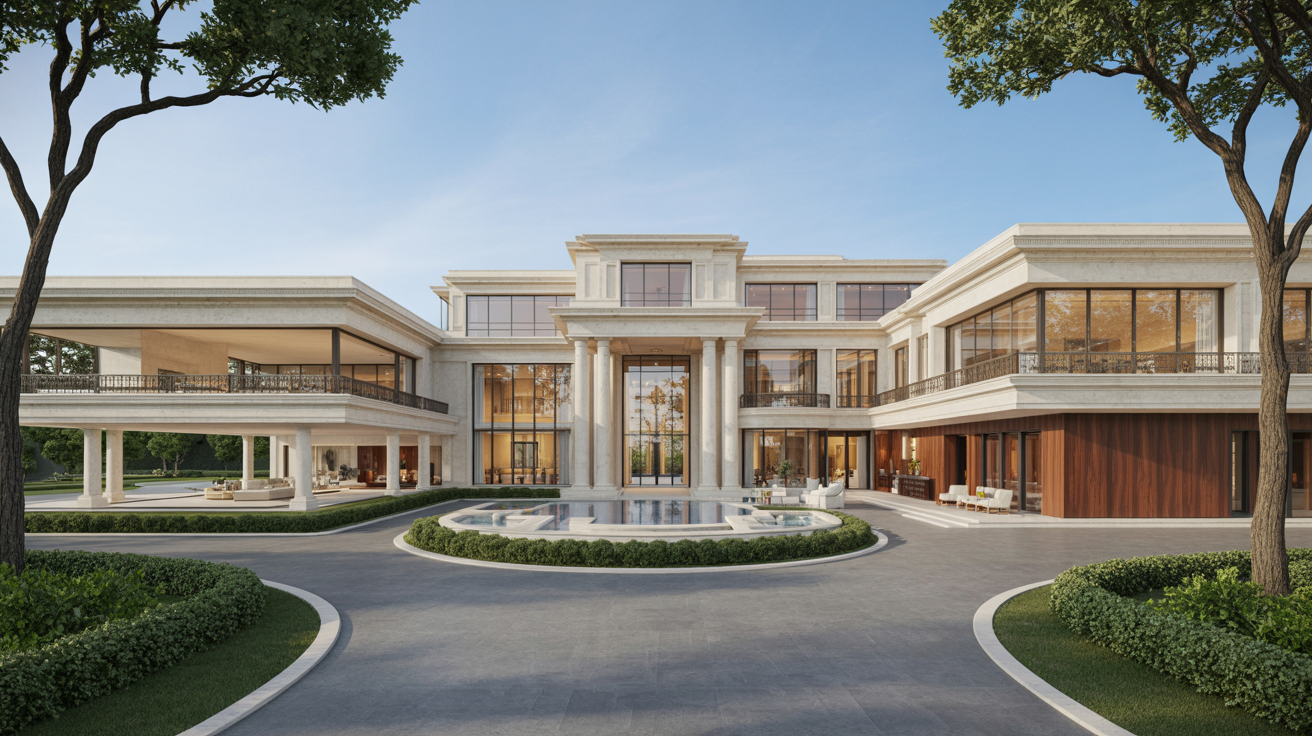
Most mansions start at around 5,000 to 8,000 square feet, with many going well beyond that range.
Most experts agree that 5,000 square feet is the general entry point, though some markets hold the bar higher.
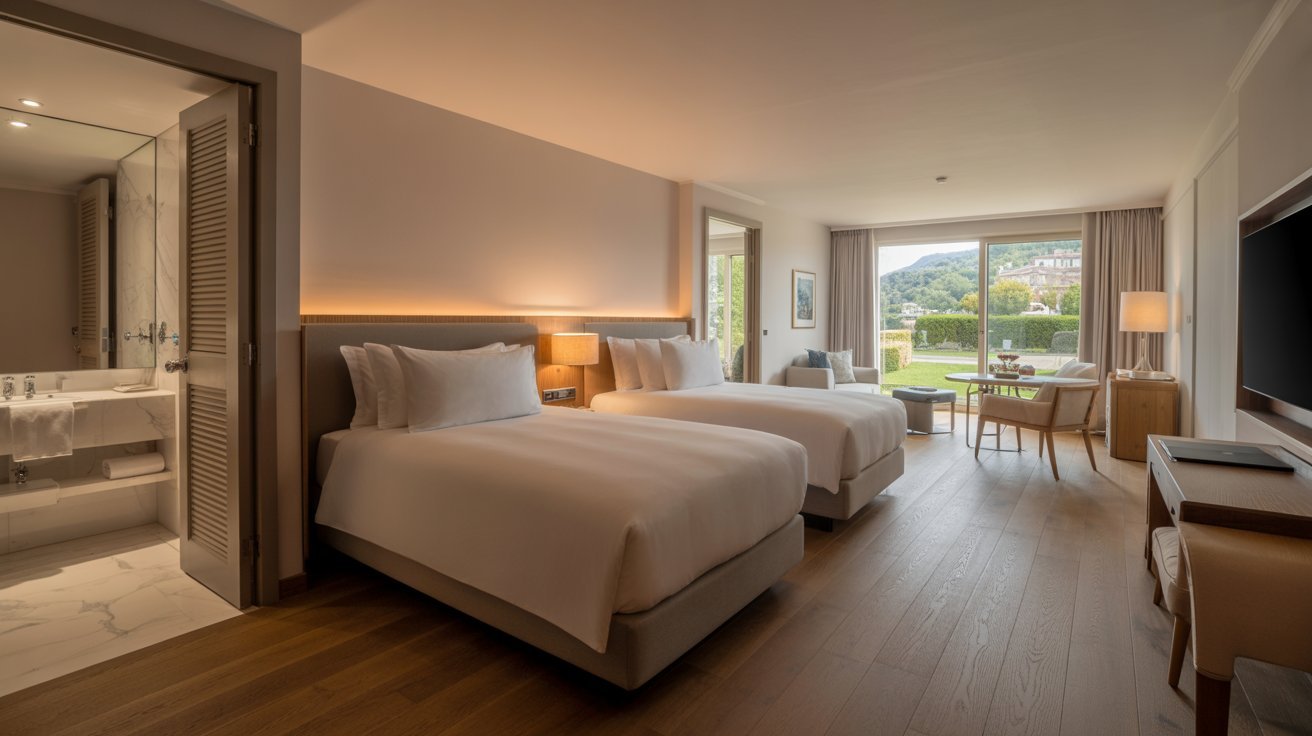
At 8,000 square feet, a home comfortably fits six or more bedrooms, formal living areas, a luxury kitchen, and bonus spaces like a gym or theater.
That said, the same home can carry different labels depending on location. In smaller towns, 5,000 square feet might easily earn the mansion title.
In cities like New York or Los Angeles, that same home may not stand out at all. Local prices and neighborhood standards always shape the definition.
Key Features That Define a Mansion
Square footage matters, but the features inside and outside the home are just as important.
Large Number of Bedrooms and Living Spaces
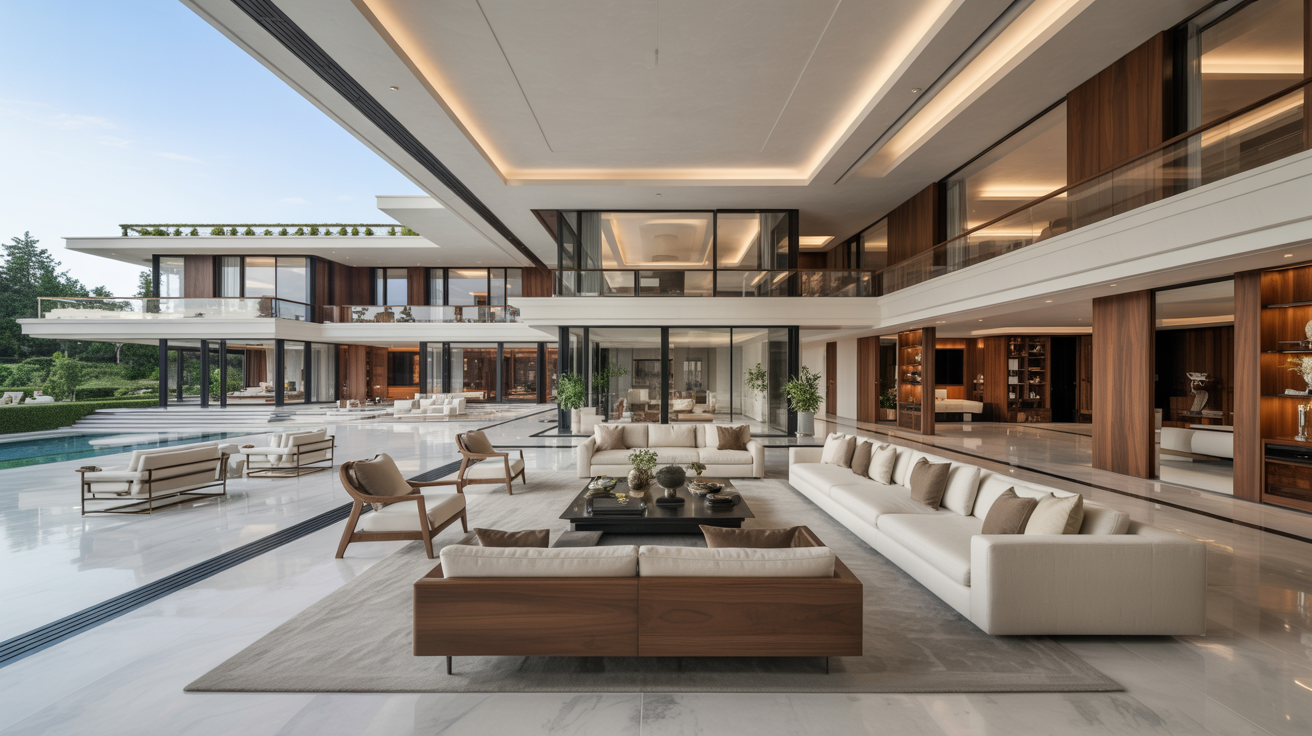
The room count and layout of a mansion go well beyond what a standard large home offers.
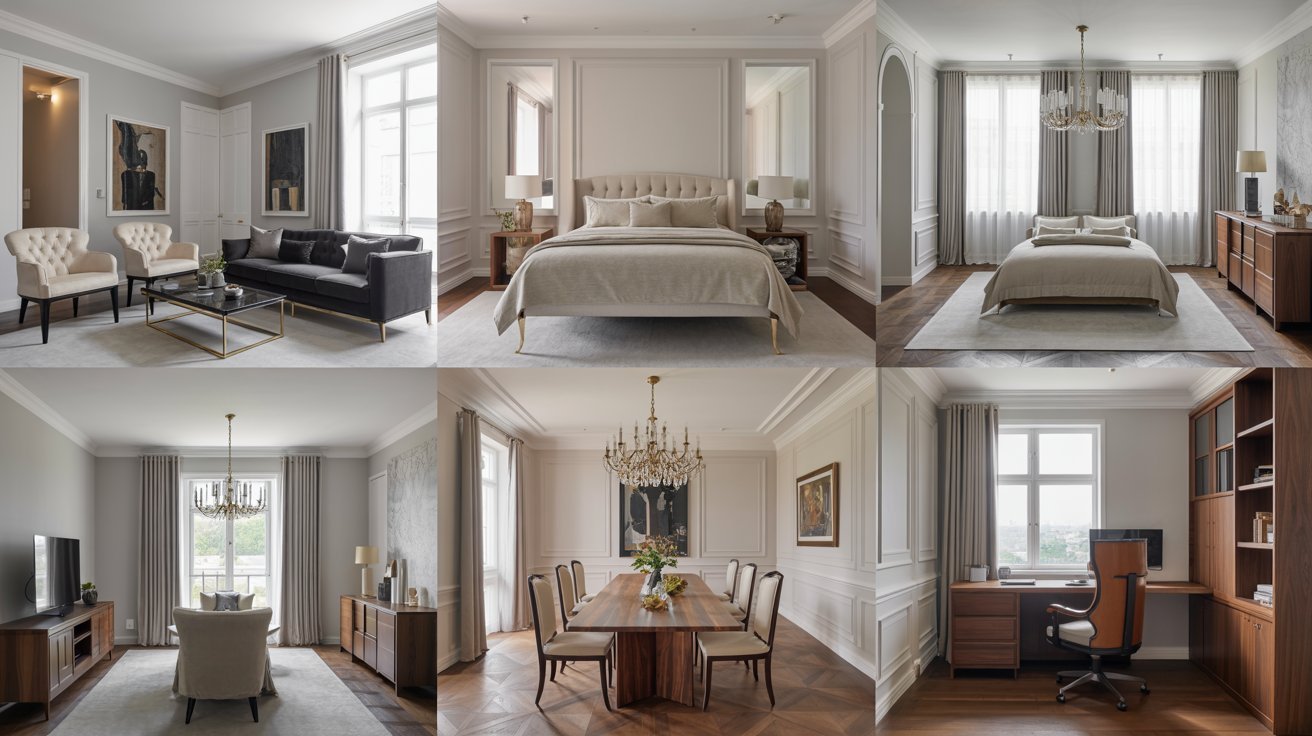
True mansions typically include six or more bedrooms along with separate formal living rooms, family rooms, and sitting areas. Each space serves a clear purpose and adds to the overall function of the home.
Luxury Amenities and Entertainment Facilities
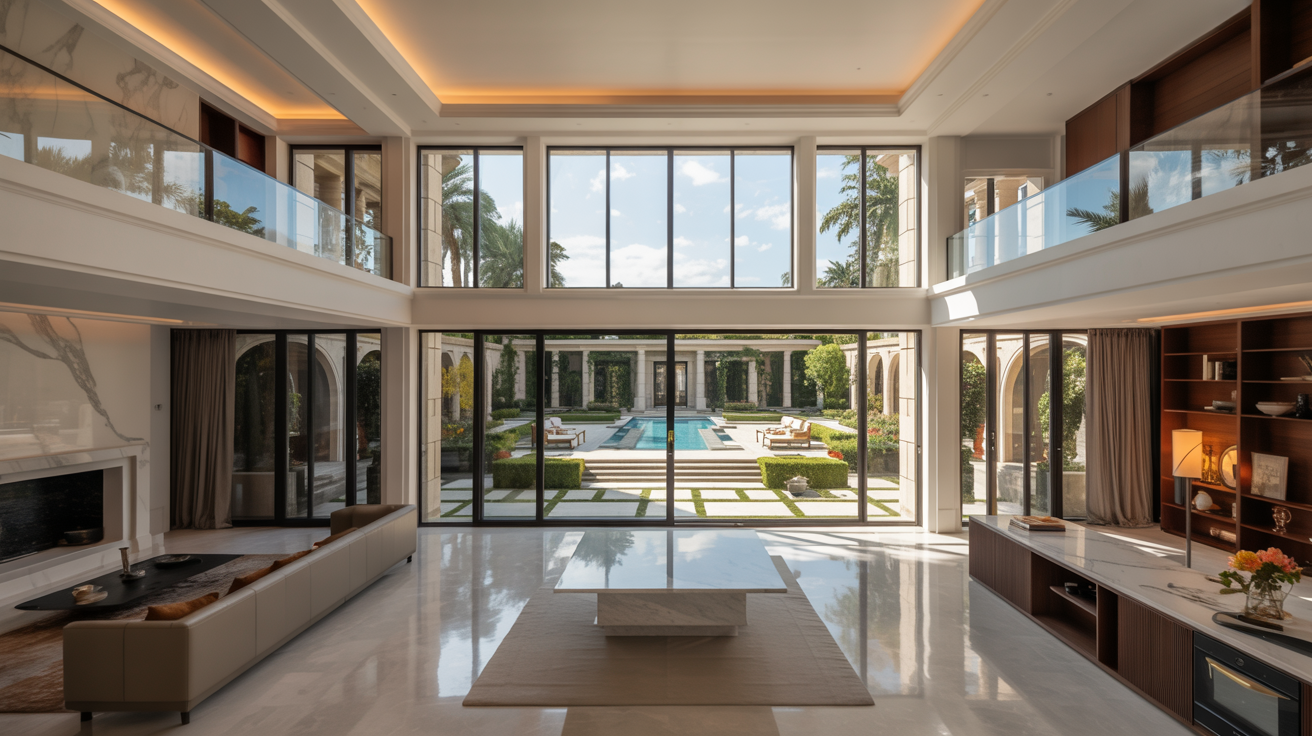
Built-in amenities are what truly separate a mansion from a large home.
Home theaters, indoor pools, gyms, and full-service bars are common in mansions. These are built into the design from the start, not added later as upgrades.
High-End Materials and Custom Architectural Design
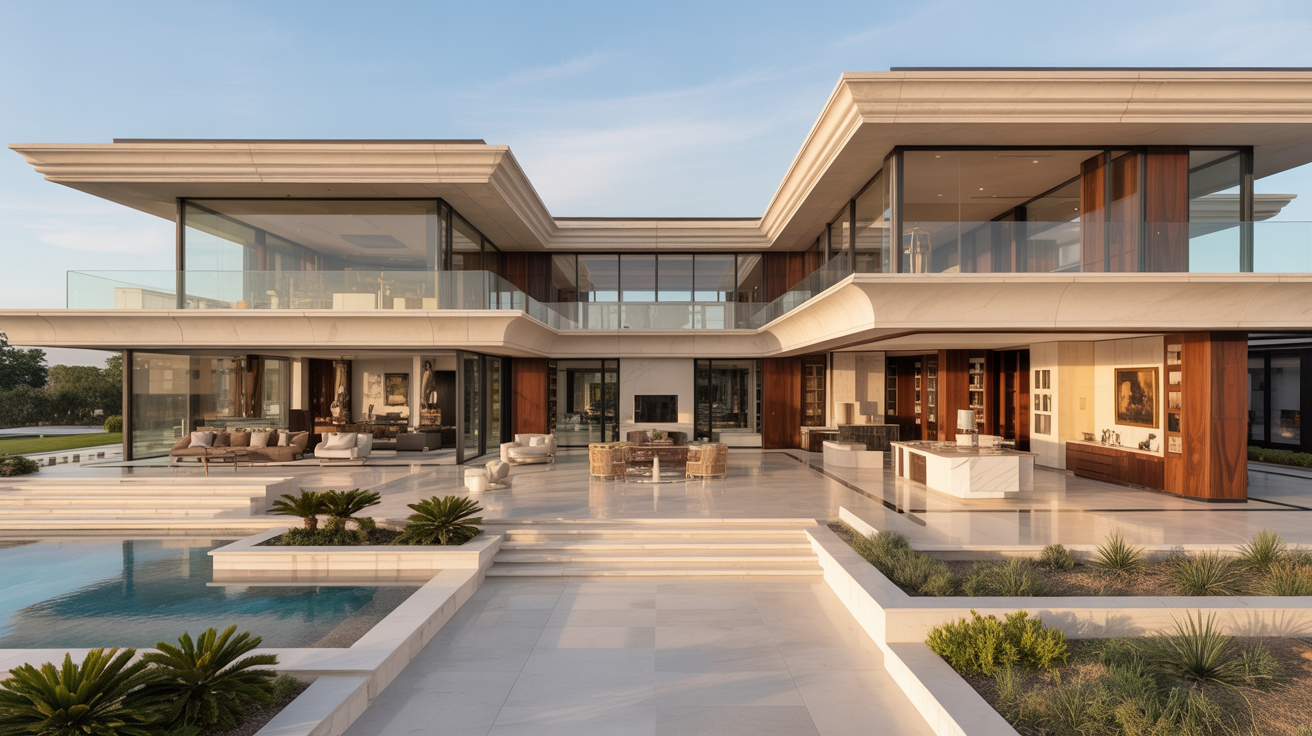
The quality of what a mansion is built matters just as much as how big it is.
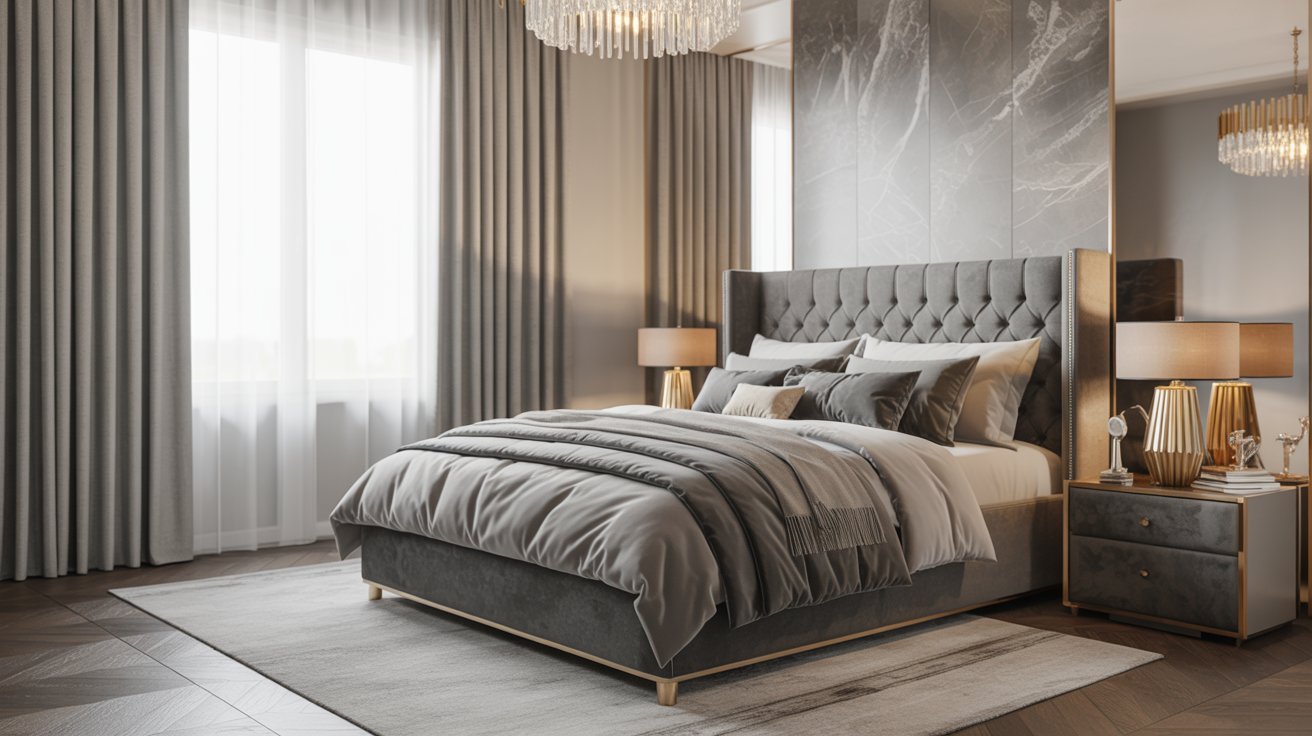
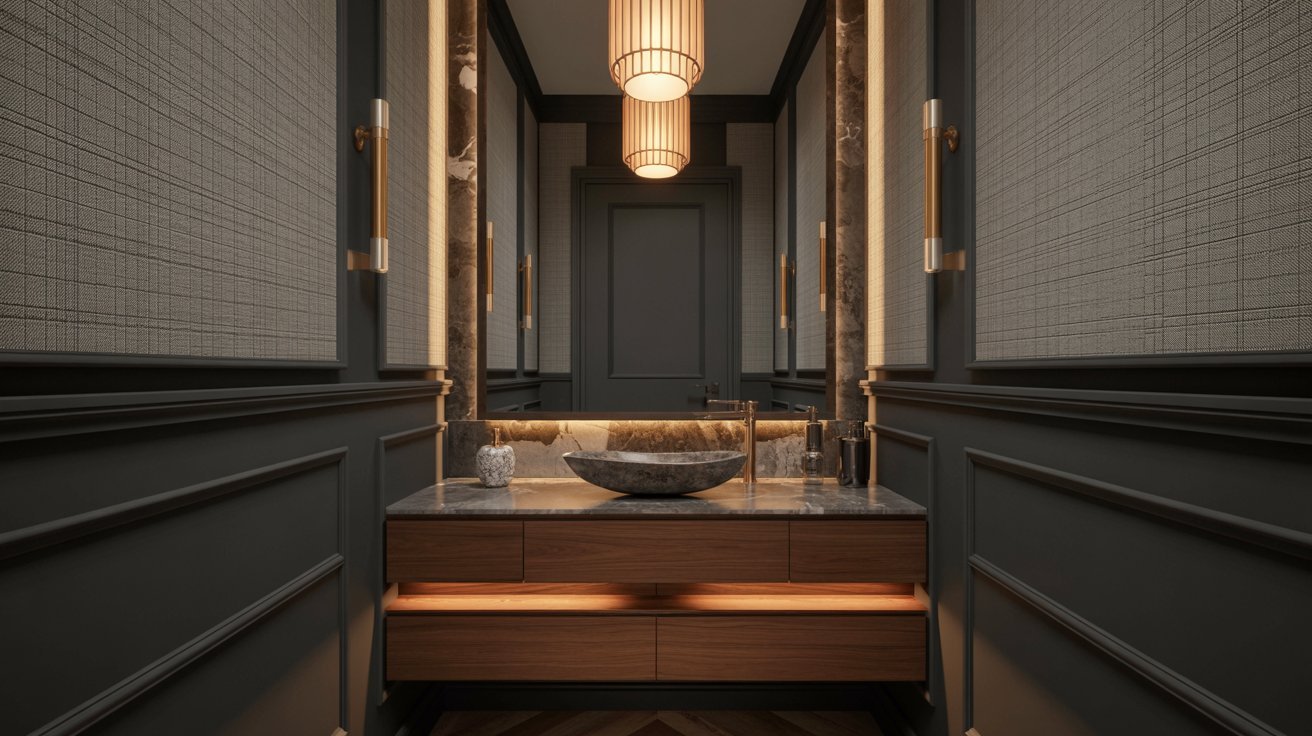
Marble floors, imported stone, and hand-crafted fixtures are standard. Most mansions are designed specifically for the owner rather than built from a standard floor plan.
Large Property Lots and Private Landscaped Grounds
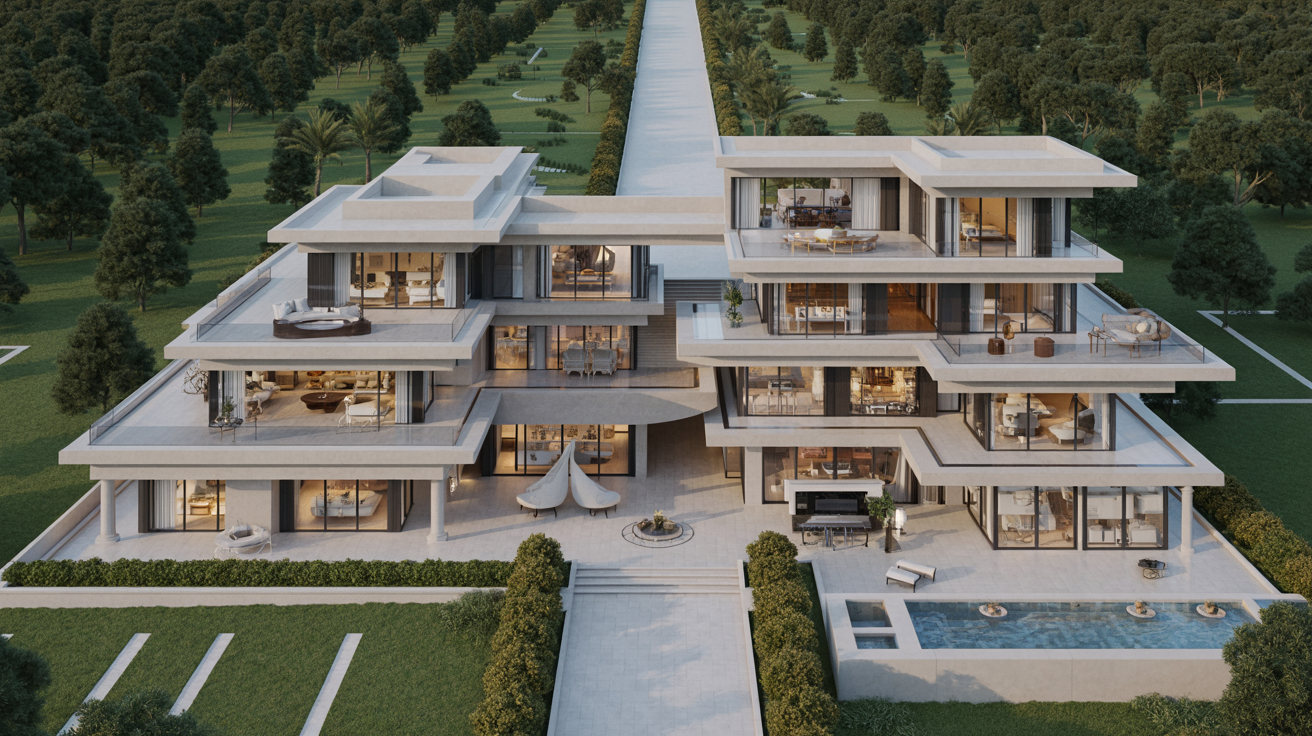
The land surrounding a mansion is a major part of what makes it a true luxury property.
Most mansions sit on several acres with manicured gardens, gated entries, and outdoor entertainment areas. Privacy is one of the most valued features at this level of real estate.
How Location Affects Mansion Size
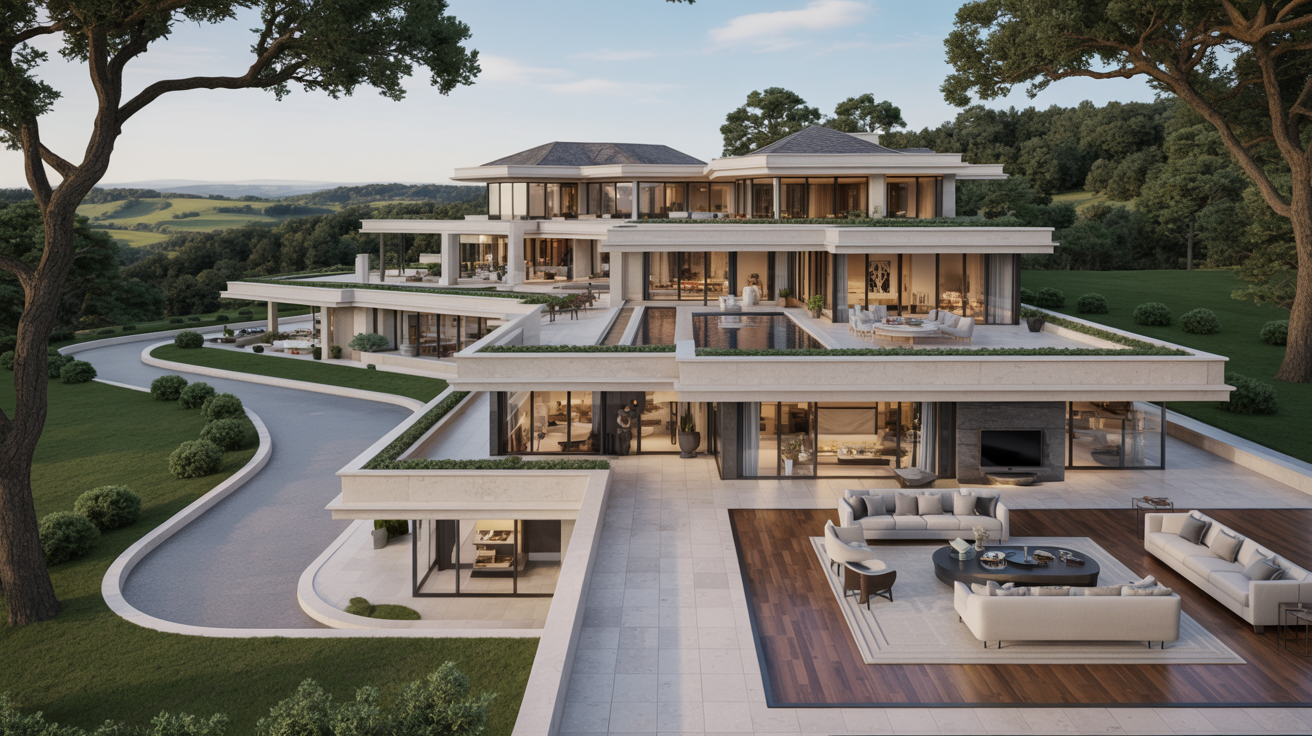
Where a home is located can change what size qualifies it as a mansion.
Mansion Size Standards in the United States
Real estate markets across the U.S. do not all follow the same size standard for mansions.
Most U.S. luxury professionals set the mansion threshold at 8,000 square feet. In the South and Midwest, 5,000 to 6,000 square feet may qualify, while coastal markets often require more.
Luxury Mansion Sizes in Europe
European mansion standards are shaped by history and land ownership traditions.
European mansions often reflect historic architecture and land traditions. A 6,000 square foot estate in France or England may carry the same prestige as a 12,000 square foot modern home in the U.S.
How Real Estate Prices Influence Mansion Definitions
Higher property values in a market raise the bar for what qualifies as a mansion locally.
In expensive markets, homes must be larger and more feature-rich to stand out. In affordable markets, a well-designed 5,000 square foot home with luxury finishes can comfortably carry the mansion label.
Common Luxury Amenities Found in Mansions
The amenities inside and outside a mansion reflect a lifestyle that goes far beyond the ordinary.
Private Pools, Tennis Courts, and Outdoor Entertainment Areas
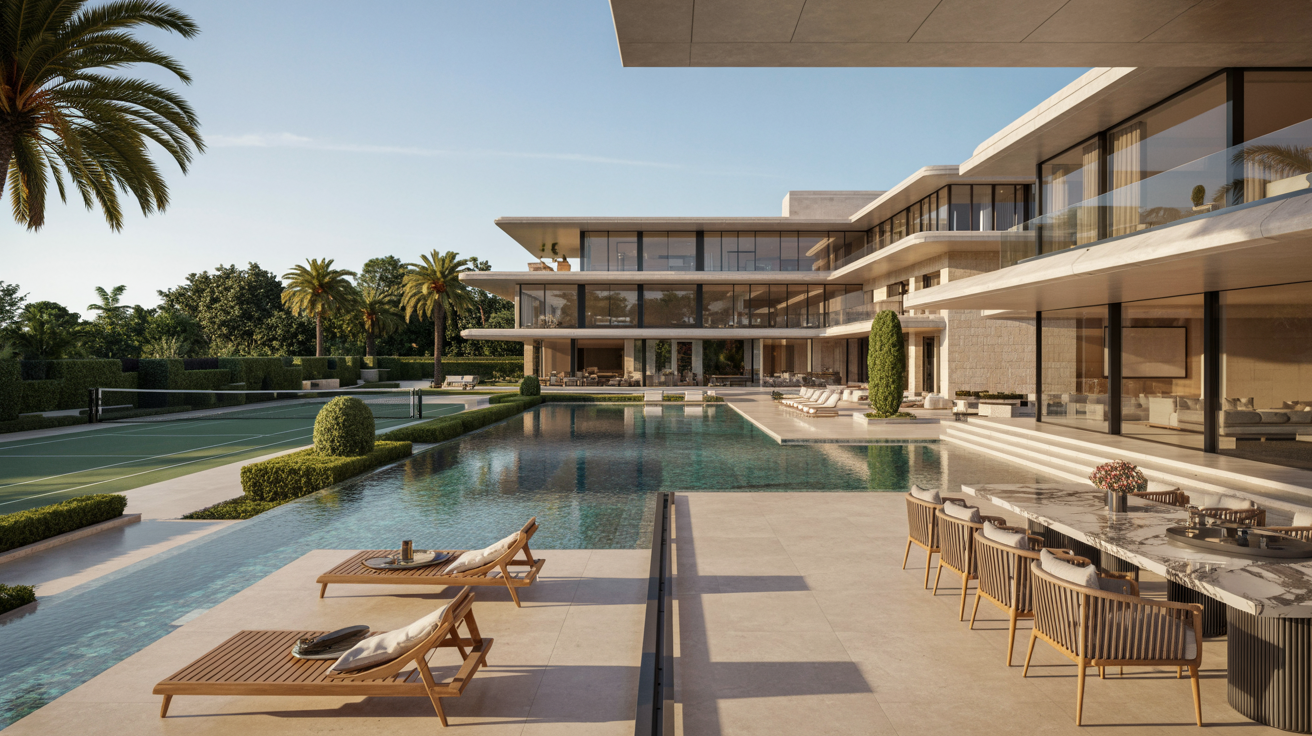
Outdoor spaces in a mansion are built for recreation, privacy, and large-scale entertaining.
Most mansions include a custom pool, hot tub, cabana, and outdoor kitchen. Tennis courts and putting greens are also common for larger estates built for entertaining.
Home Theaters, Game Rooms, and Bowling Alleys
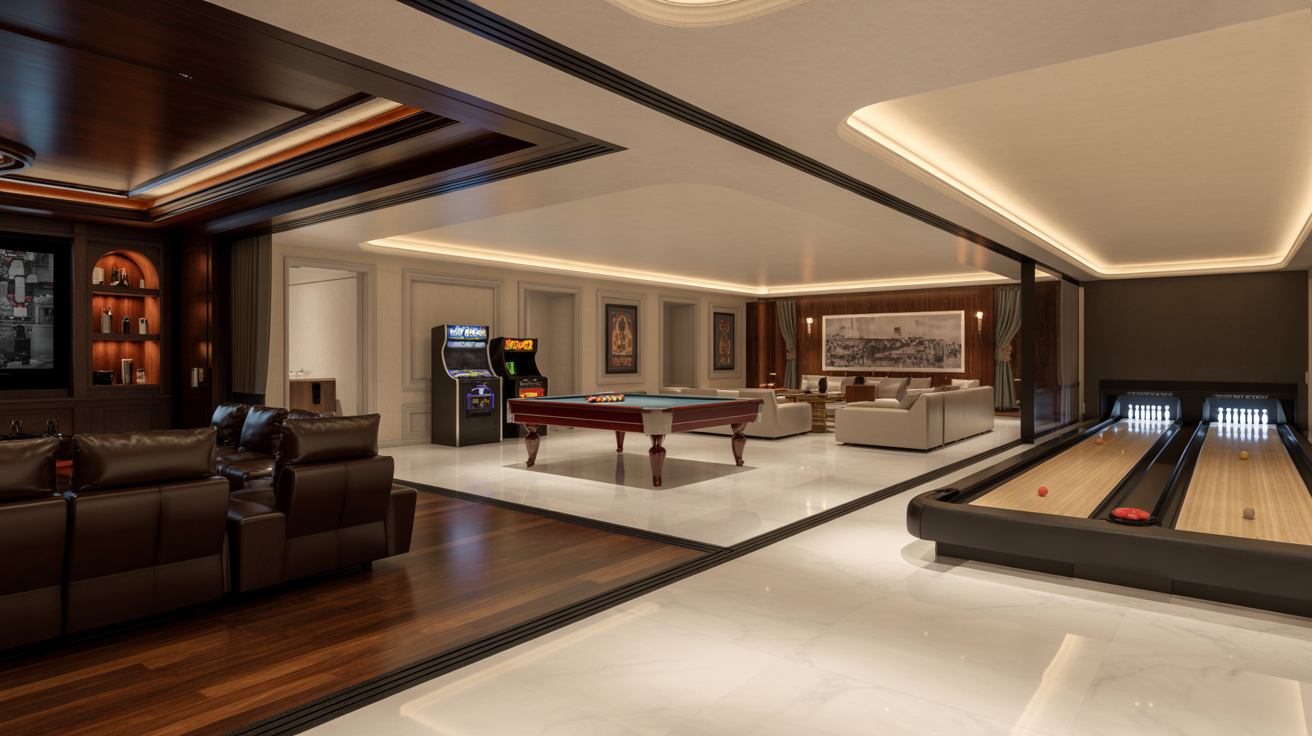
Indoor entertainment spaces in a mansion go well beyond a standard living room setup.
Home theaters in mansions feature professional sound, tiered seating, and custom lighting. Game rooms often include billiards and lounge seating, while some estates even have full bowling alleys.
Smart Home Technology and Advanced Security Systems
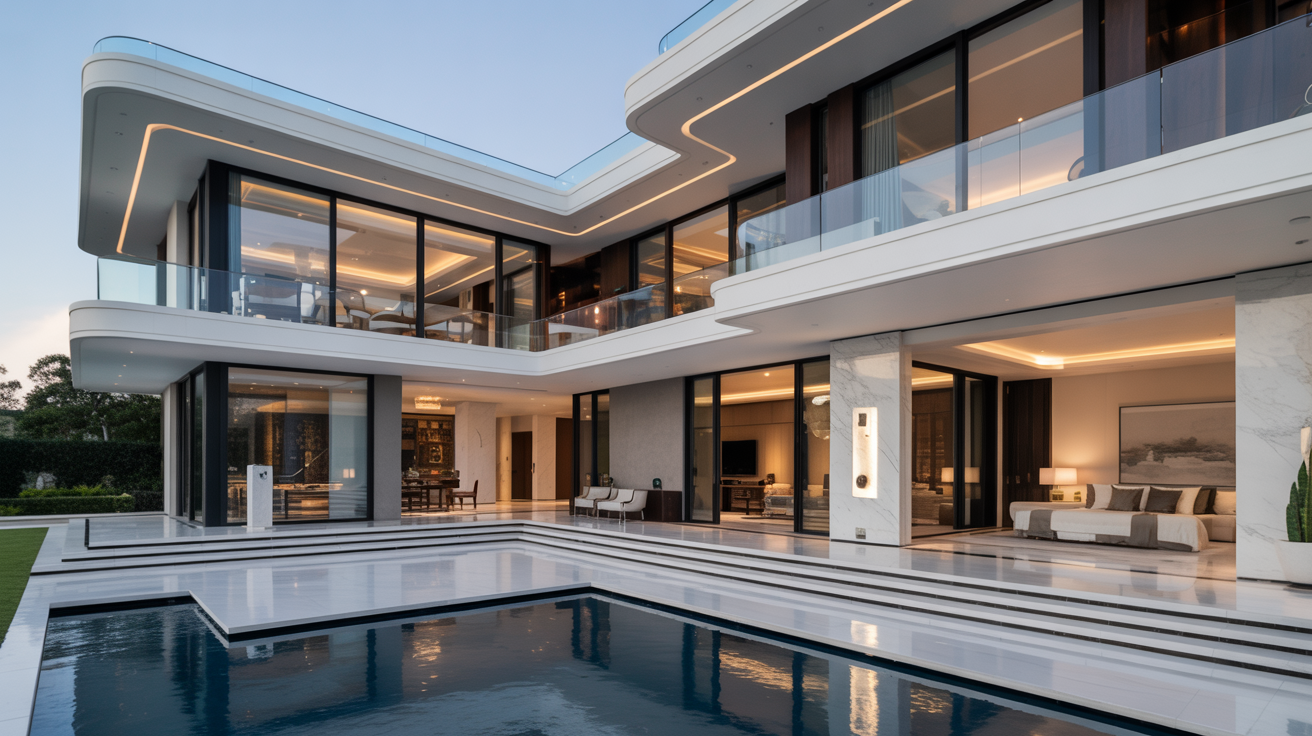
Modern mansions are built with integrated technology that handles comfort and safety together.
Smart systems control lighting, climate, and entertainment from one device. Advanced security includes multi-camera surveillance, biometric entry, gated perimeters, and 24-hour monitoring.
Wine Cellars, Libraries, and Private Wellness Spaces
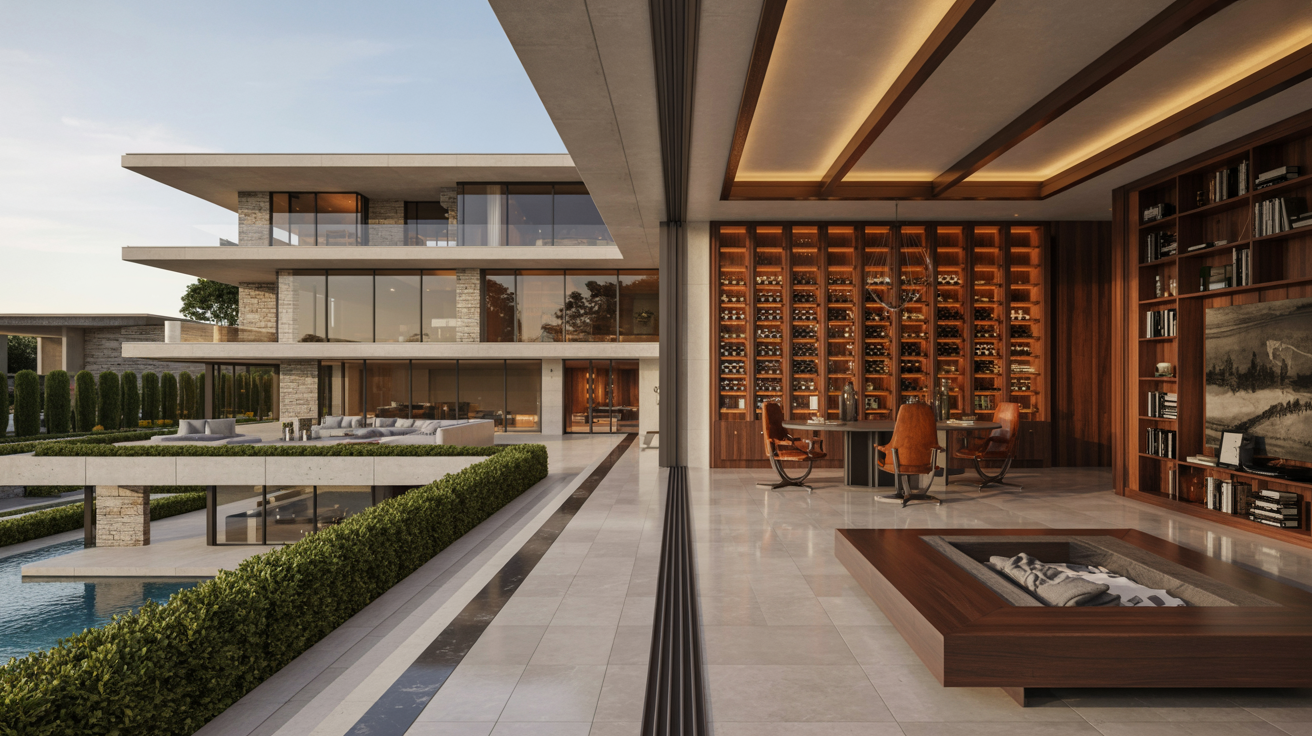
Dedicated rooms for personal passions and wellness are a hallmark of full-scale mansions.
Wine cellars are climate-controlled and built to hold hundreds of bottles. Libraries and private wellness rooms with saunas, steam rooms, and gyms are also common in full-scale mansions.
Tips for Understanding If a House Qualifies as a Mansion
These tips will help you evaluate any large property against the standard that defines a true mansion.
- Check that the total square footage meets at least 5,000 to 8,000 square feet, the range most professionals recognize as the starting point.
- Look at the quality of materials used, including flooring, cabinetry, and fixtures. Low-cost finishes disqualify a home regardless of its size.
- Confirm the home was custom-built or significantly custom-modified rather than built from a standard suburban floor plan.
- Evaluate the lot size and privacy level. A true mansion typically sits on a large lot with gates, walls, or natural landscaping providing separation.
- Identify specialty amenities like a pool, theater, wine cellar, gym, or guest house. These confirm the home operates at a mansion level.
- Compare the property to other luxury homes in the same market to understand where it stands in size, quality, and features.
Conclusion
I have spent a lot of time researching luxury homes, and one thing I have learned is that a mansion is more than just a big house.
What size house is considered a mansion? It starts around 5,000 to 8,000 square feet, but size alone does not tell the full story.
Land, quality, design, and amenities all matter equally. If you found this guide helpful, I would love to hear your thoughts in the comments.
Share this post with someone who is curious about luxury real estate too!
Frequently Asked Questions
Is a 5,000 Square Foot House Considered a Mansion?
It depends on the market. In many areas, 5,000 square feet with luxury finishes can qualify, though high-end markets often treat this as just the minimum entry point.
Is an 8,000 Square Foot House a Mansion?
Yes. Most real estate professionals consider 8,000 square feet a clear mansion threshold, with enough room for grand spaces, luxury amenities, and private areas.
How Many Bedrooms Are Usually in a Mansion?
Most mansions have at least six bedrooms, each with a private bathroom and walk-in closet. Larger estates often feature eight or more.
Can a Smaller Luxury Home Still Be Called a Mansion?
Sometimes, depending on the market and features. However, most professionals still require a minimum square footage before applying the mansion label.
What Is the Difference Between a Mansion and an Estate?
A mansion is the main home. An estate includes the full property, land, outbuildings, guest houses, and grounds surrounding it.