I’ve spent time helping homeowners turn wasted basement space into something worth using daily. A luxury basement gym is one of the smartest upgrades you can make to your home.
In this article, I’ll walk you through 11 real design ideas, key features to include, and planning tips that save you money and stress.
You’ll also learn what it costs and how to avoid common mistakes. I’ve worked with enough home fitness spaces to know what works and what doesn’t.
If you’re ready to build something great, let’s get into it.
Why a Luxury Basement Gym Is the Worth It
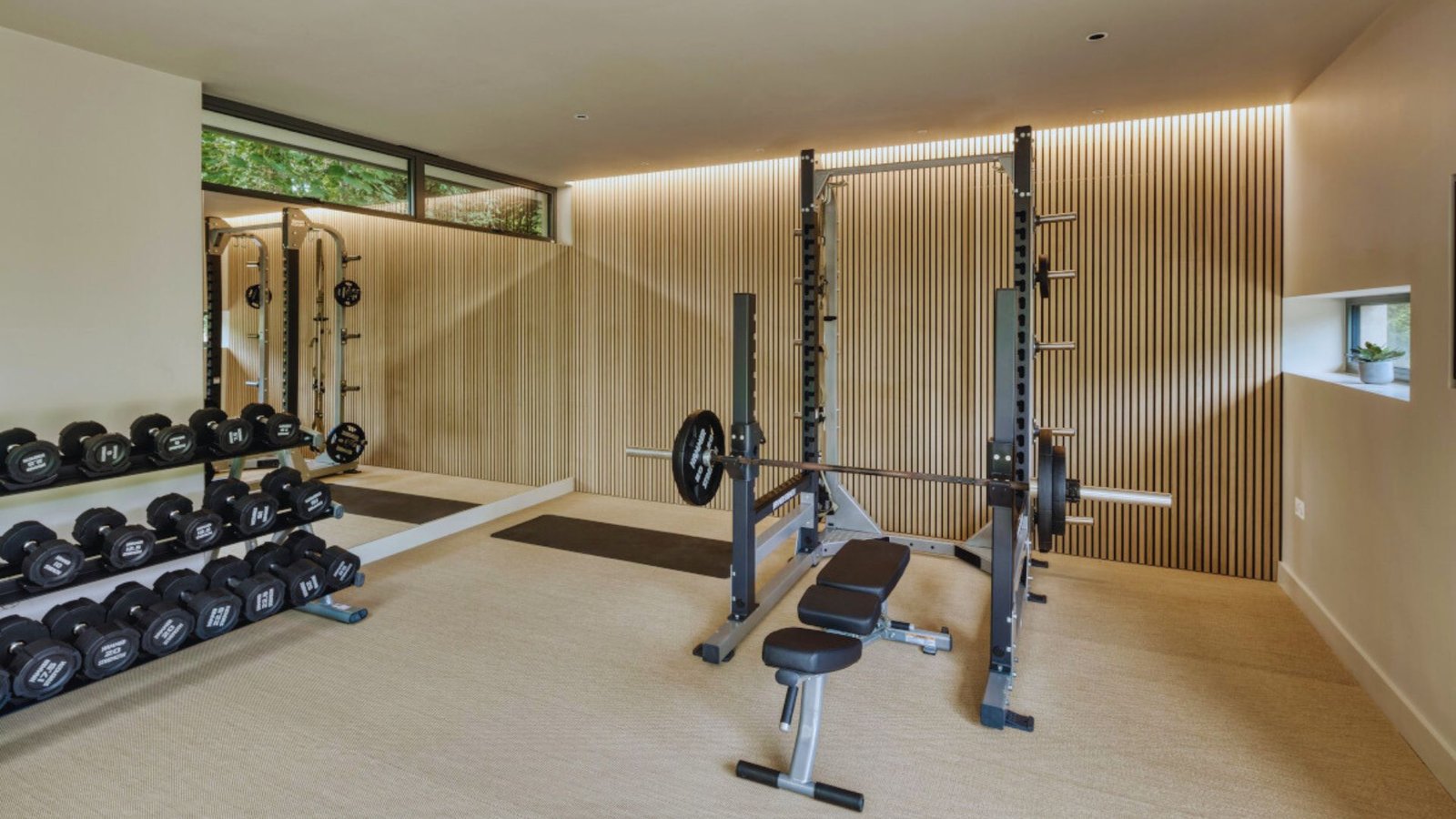
A luxury basement gym gives you something most public gyms never will have full control of. You train when you want, how you want, with no waiting for equipment, no crowds, and no commute eating into your day.
Privacy matters more than people realize. When your gym is steps away, you actually use it. Basements also stay naturally cool, and with the right HVAC setup, you get comfortable year-round training no matter what the weather does outside.
Beyond fitness, this upgrade makes financial sense too. A well-finished basement gym adds real, measurable value to your home. Buyers notice it. Real estate agents bring it up.
But more than resale value, you get a space built around your goals and your training style. That’s something no commercial gym membership can ever give you.
11 Luxury Basement Gym Design Ideas
From minimalist setups to full-feature builds, these ideas cover every style, goal, and budget.
1. Minimalist Modern Luxury Basement Gym
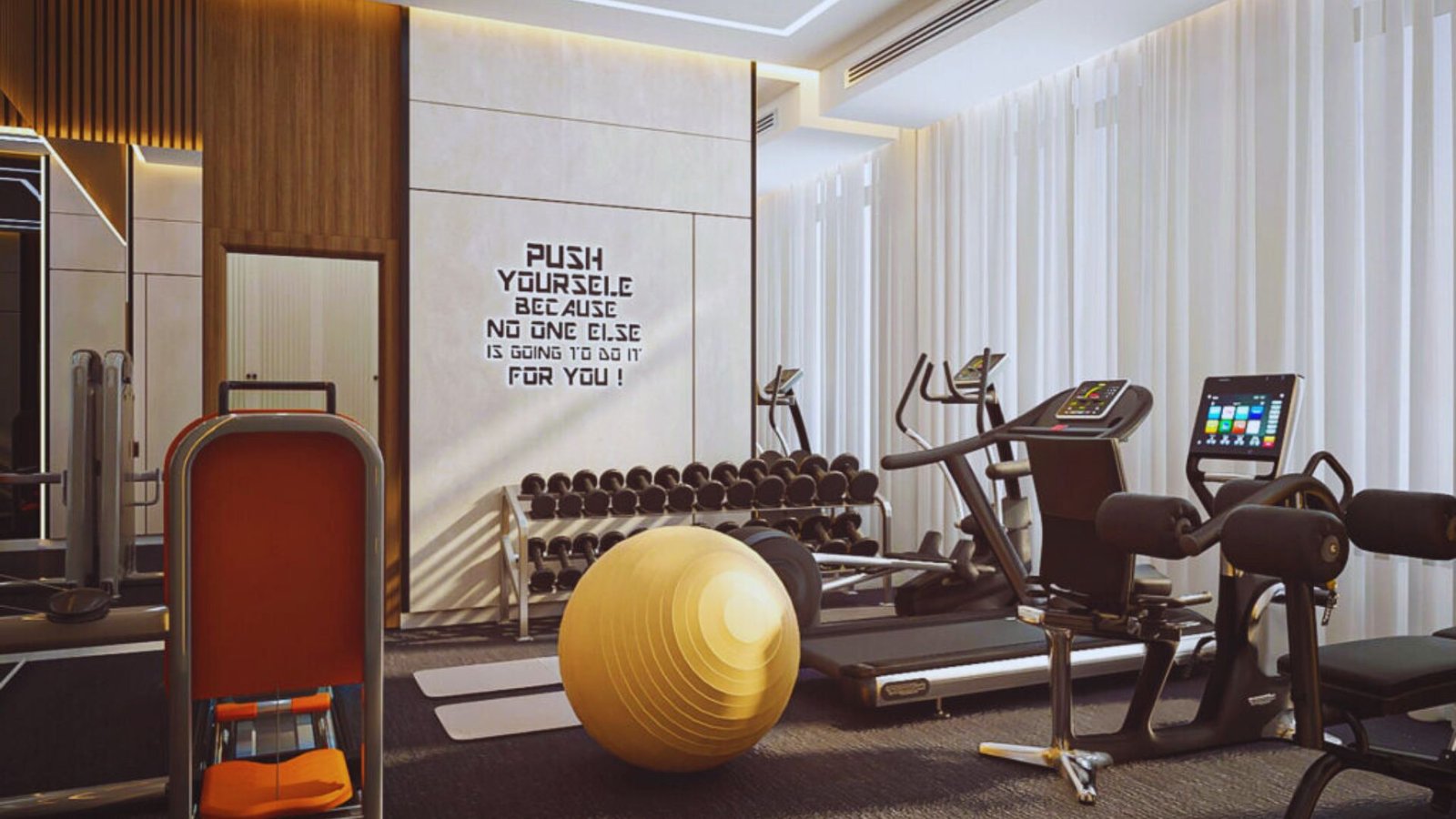
Clean lines, neutral tones, and only the equipment you actually use. Less clutter means more focus. Choose matte finishes, hidden storage, and a simple color palette like white, grey, or black. This style works especially well for people who find a busy gym distracting.
2. Elite Strength Training Studio
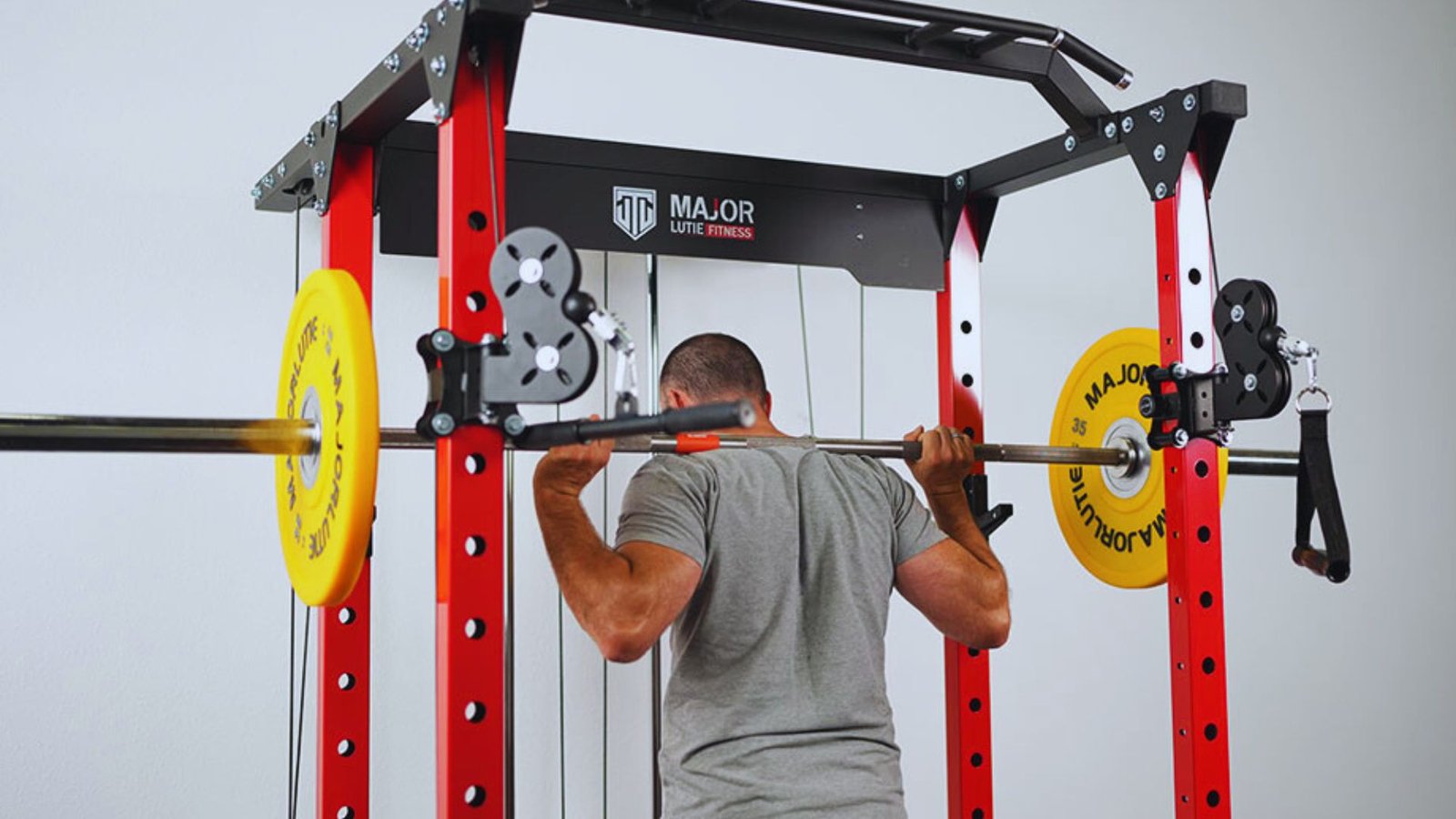
Heavy-duty power racks, platform flooring, and industrial shelving for plates and bars. Built for serious lifters. Use thick rubber flooring to absorb heavy drops and protect your concrete subfloor. Add a full mirror wall so you can monitor your form during every set.
3. Glass-Enclosed Cardio Lounge
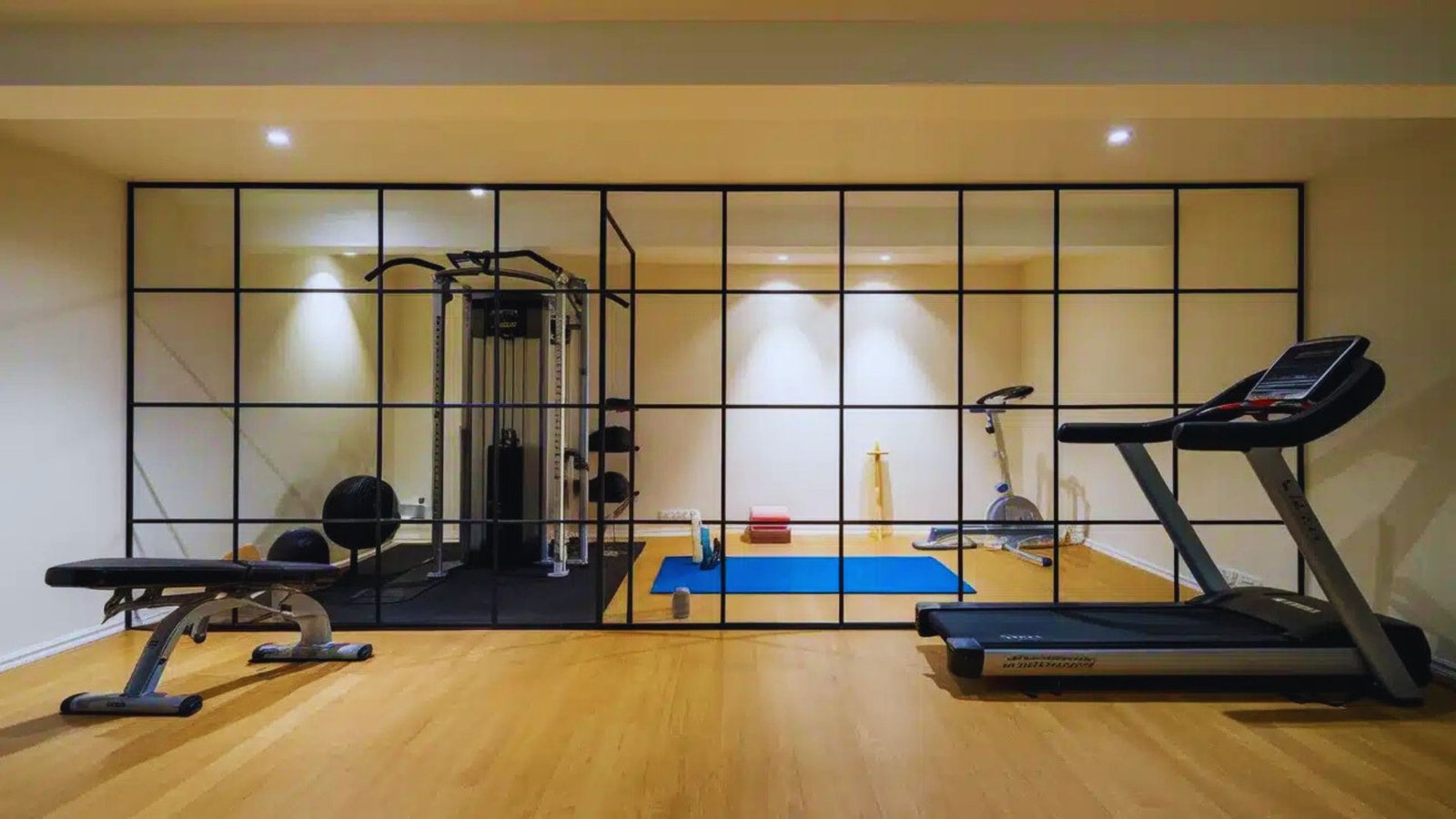
A glass partition separates cardio machines from the rest of the gym. It keeps noise contained and adds a high-end visual feel. Frosted or clear glass panels work well depending on how open you want the space to feel.
This setup also lets you watch TV or use a screen without disturbing anyone training in the other zone.
4. Spa-Influenced Wellness Retreat
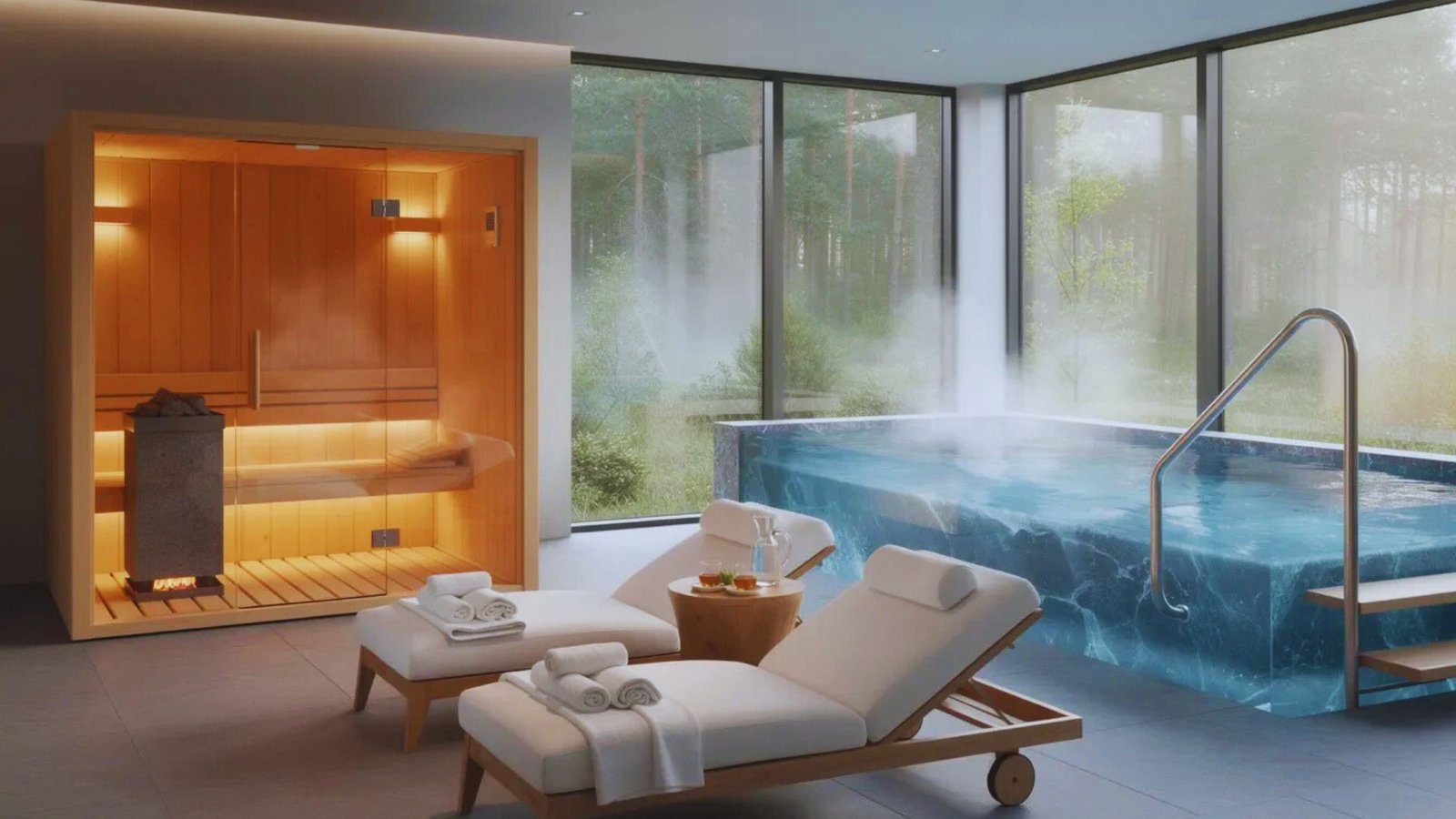
Add a sauna, cold plunge tub, or steam unit beside your workout area. Recovery is part of training. Natural wood finishes, warm lighting, and stone tile flooring tie the wellness zone together.
This design works best when the recovery area is separated from the main training floor with a partial wall or glass divider.
5. Smart Tech-Integrated Fitness Hub
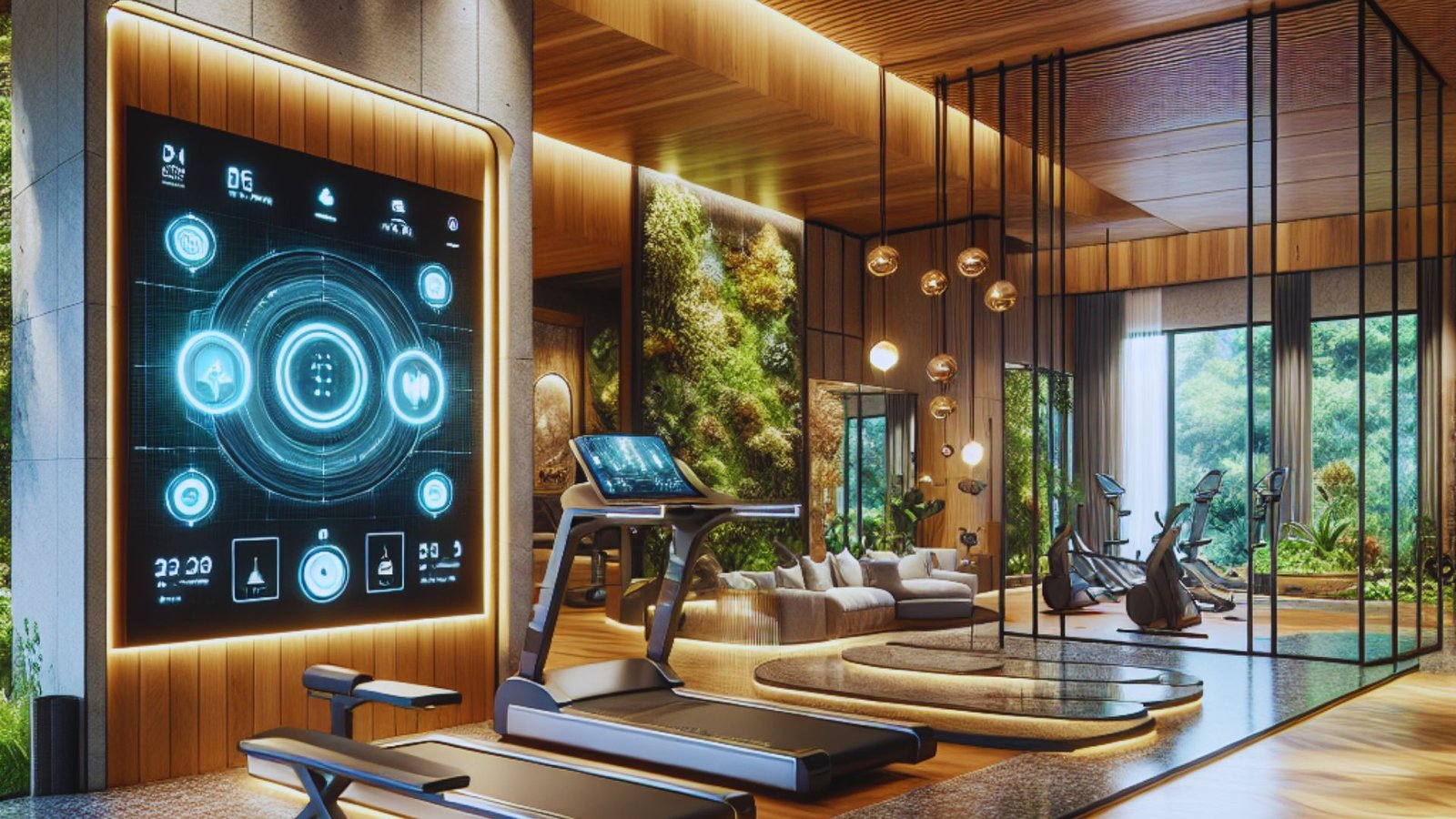
Voice-controlled lighting, heart rate monitors synced to wall displays, and AI-based workout programs built into your mirror. You can also add smart locks, climate controls, and app-connected equipment all managed from one device.
This setup is ideal for people who track performance data and want their gym to work as hard as they do.
6. Boutique Yoga and Pilates Studio
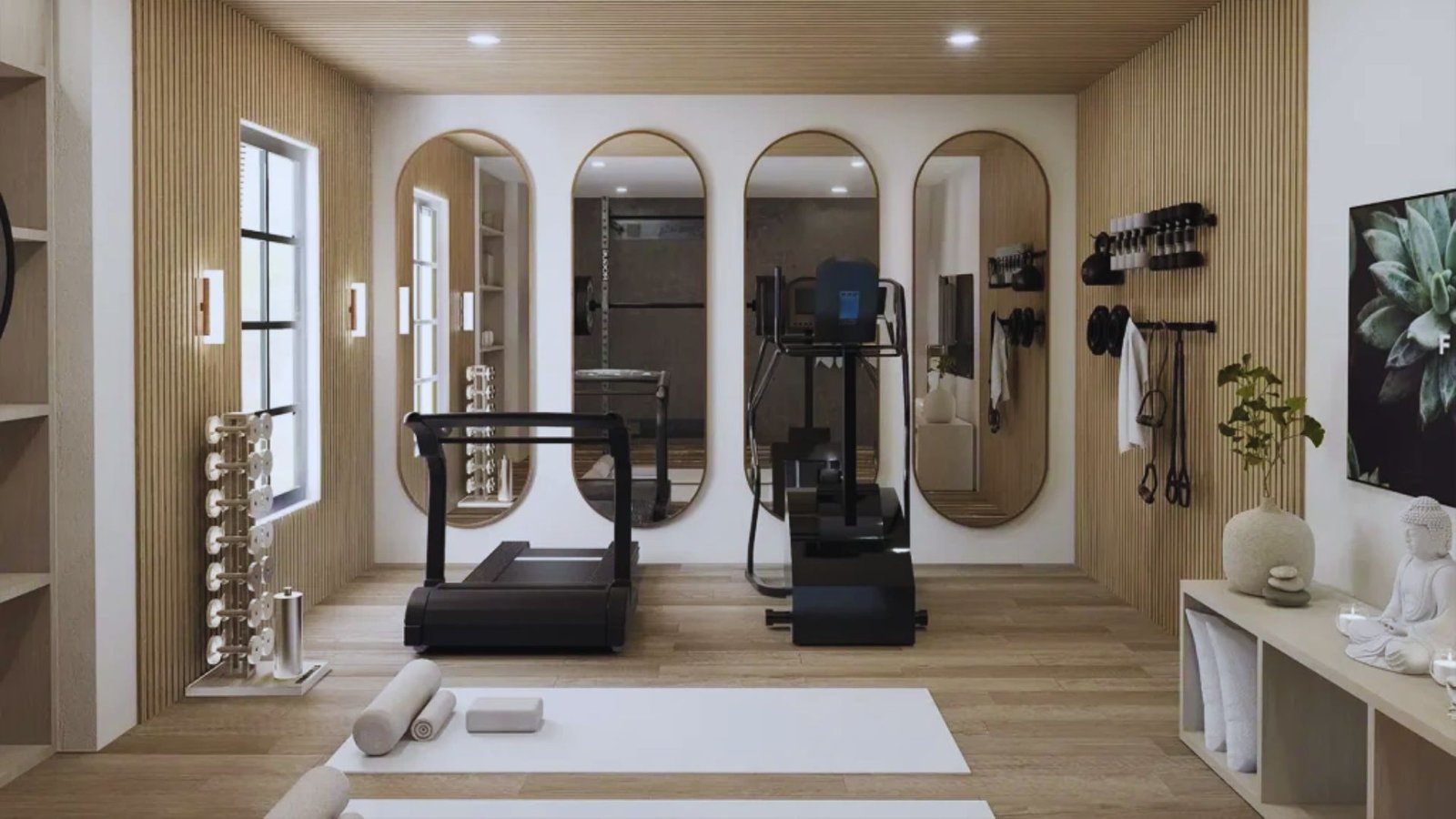
Sprung wood flooring, floor-to-ceiling mirrors, and soft lighting create a studio feel right at home. Add cork wall panels for warmth and sound absorption. Keep the space free of heavy equipment so movement stays fluid and the room stays calm.
7. Industrial-Chic Performance Space
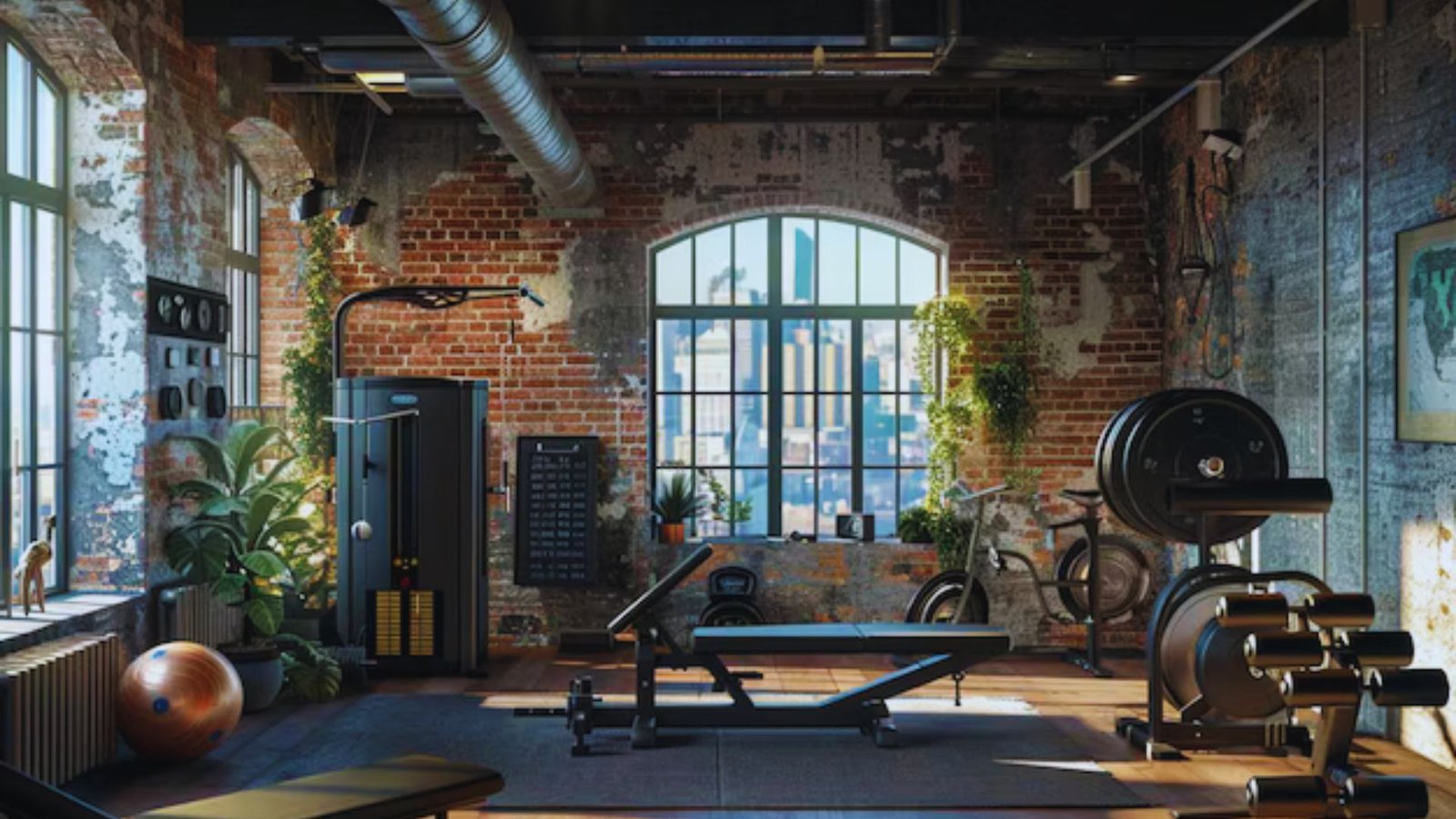
Exposed brick, black steel fixtures, and dark rubber floors. Bold, raw, and motivating. Pipe-style lighting fixtures and open ceiling beams add to the industrial feel without needing major structural work.
This design pairs well with heavier training styles like CrossFit or functional fitness.
8. Multi-Zone Training Suite
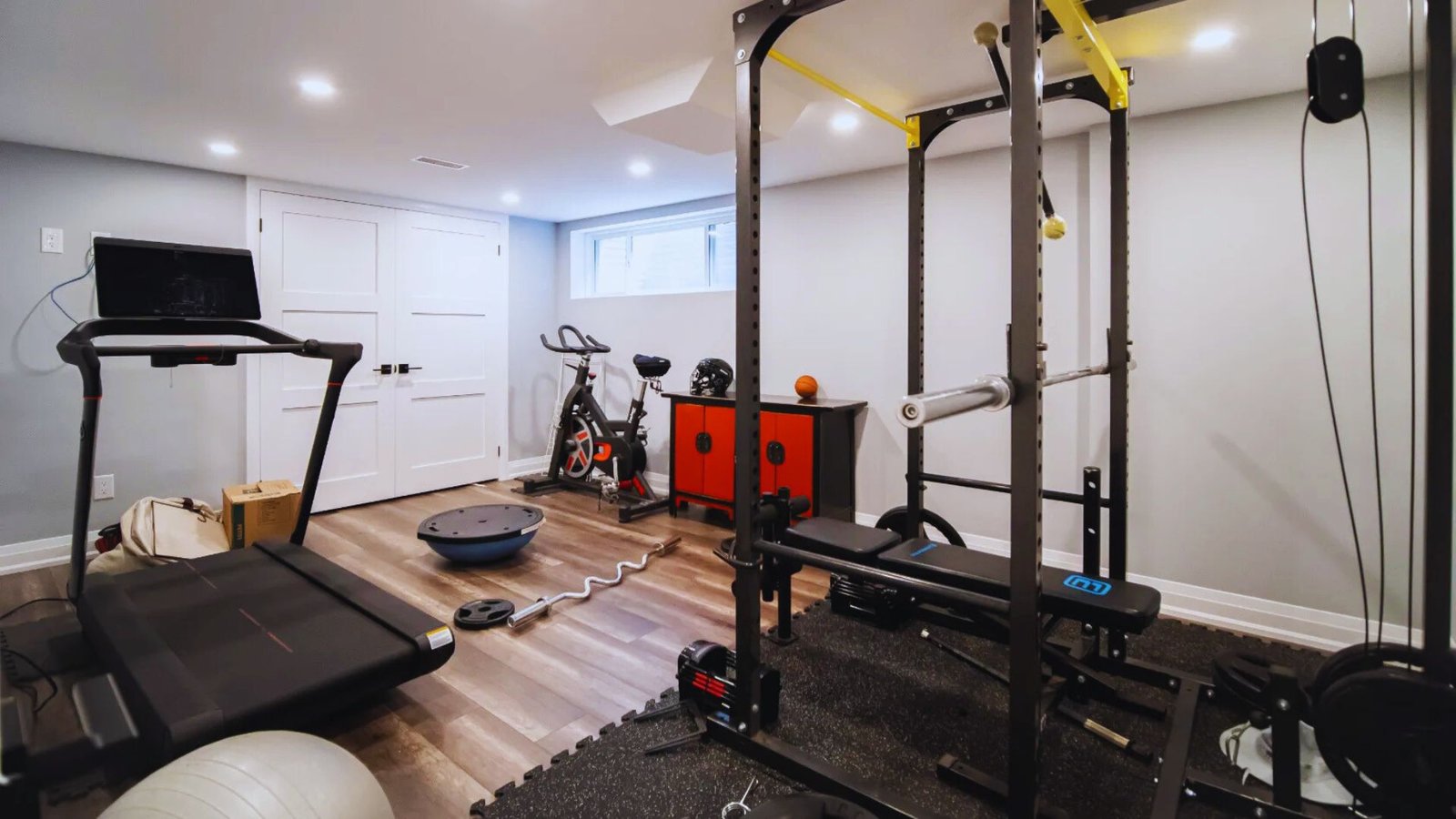
Split the basement into zones: lifting, cardio, stretching, and recovery. Each area has its own purpose and layout. Use flooring changes or low partition walls to define each zone without fully closing off the space.
This setup suits households where more than one person uses the gym with different training goals.
9. Compact Yet Functional Basement Gym
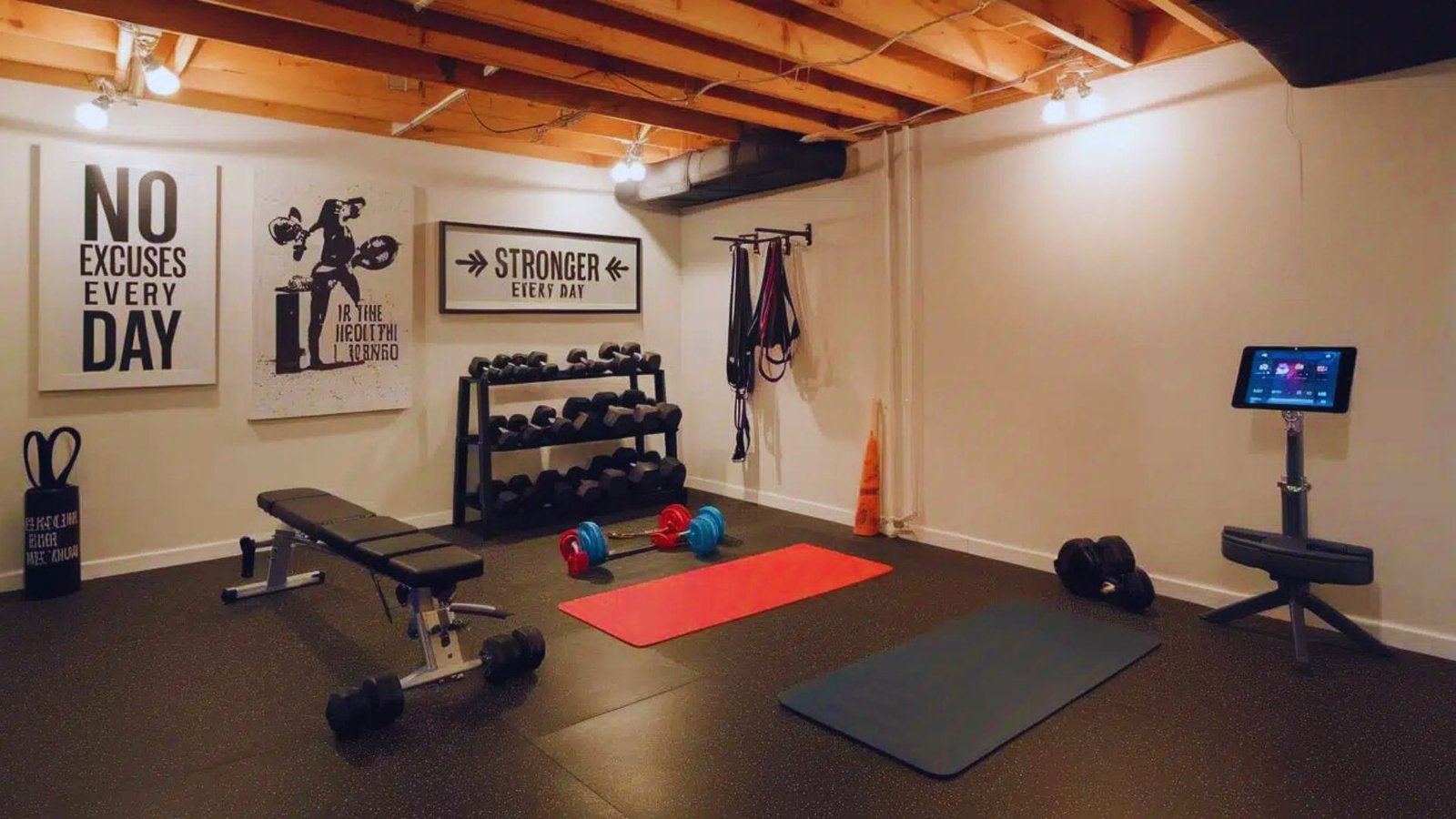
A small basement? Use wall-mounted racks, foldable benches, and vertical storage to make every square foot count. A cable machine with multiple attachments can replace several individual pieces of equipment.
Smart planning here means you lose nothing in function, even with limited floor space.
10. Motivational Design-Focused Gym
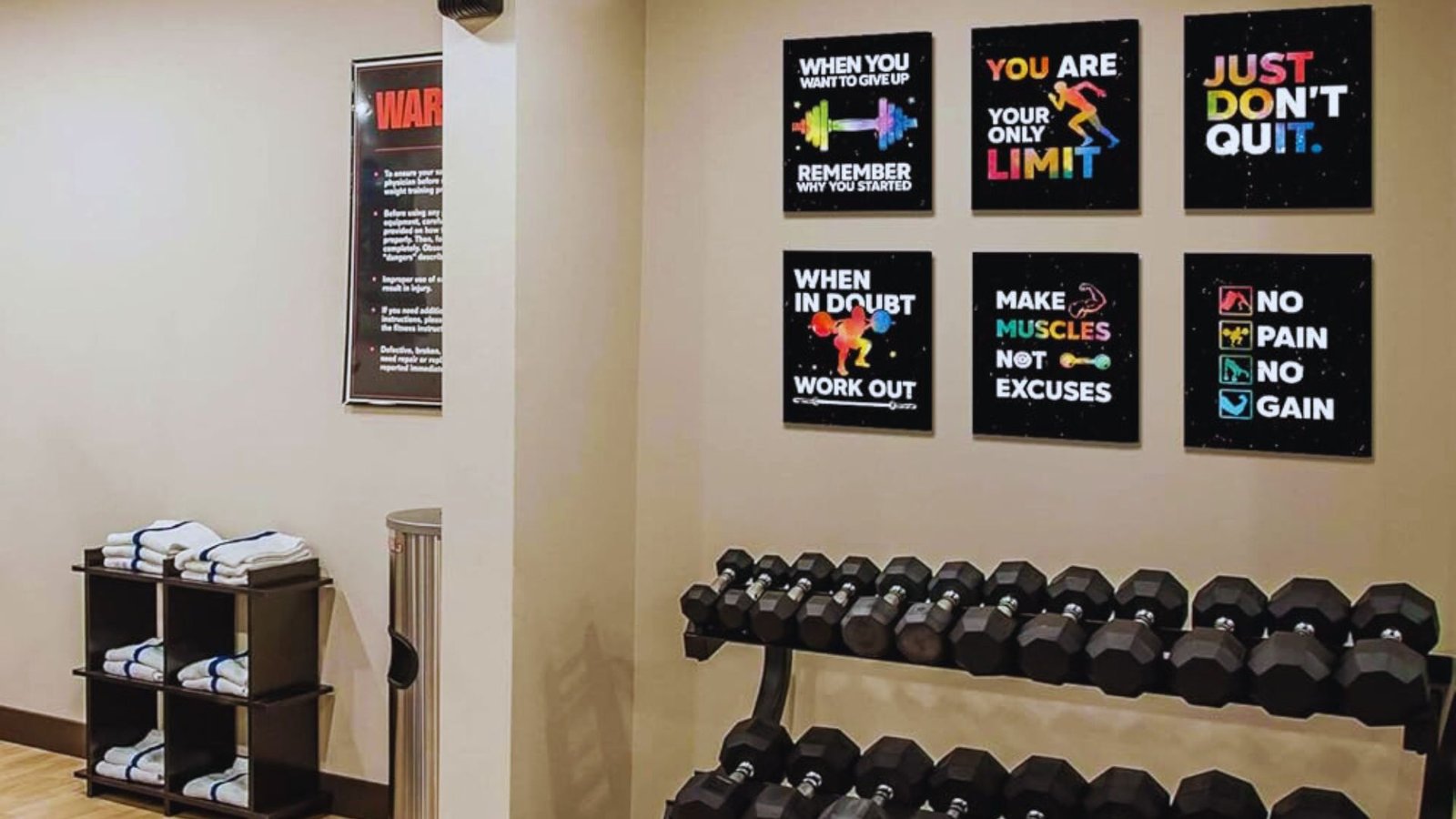
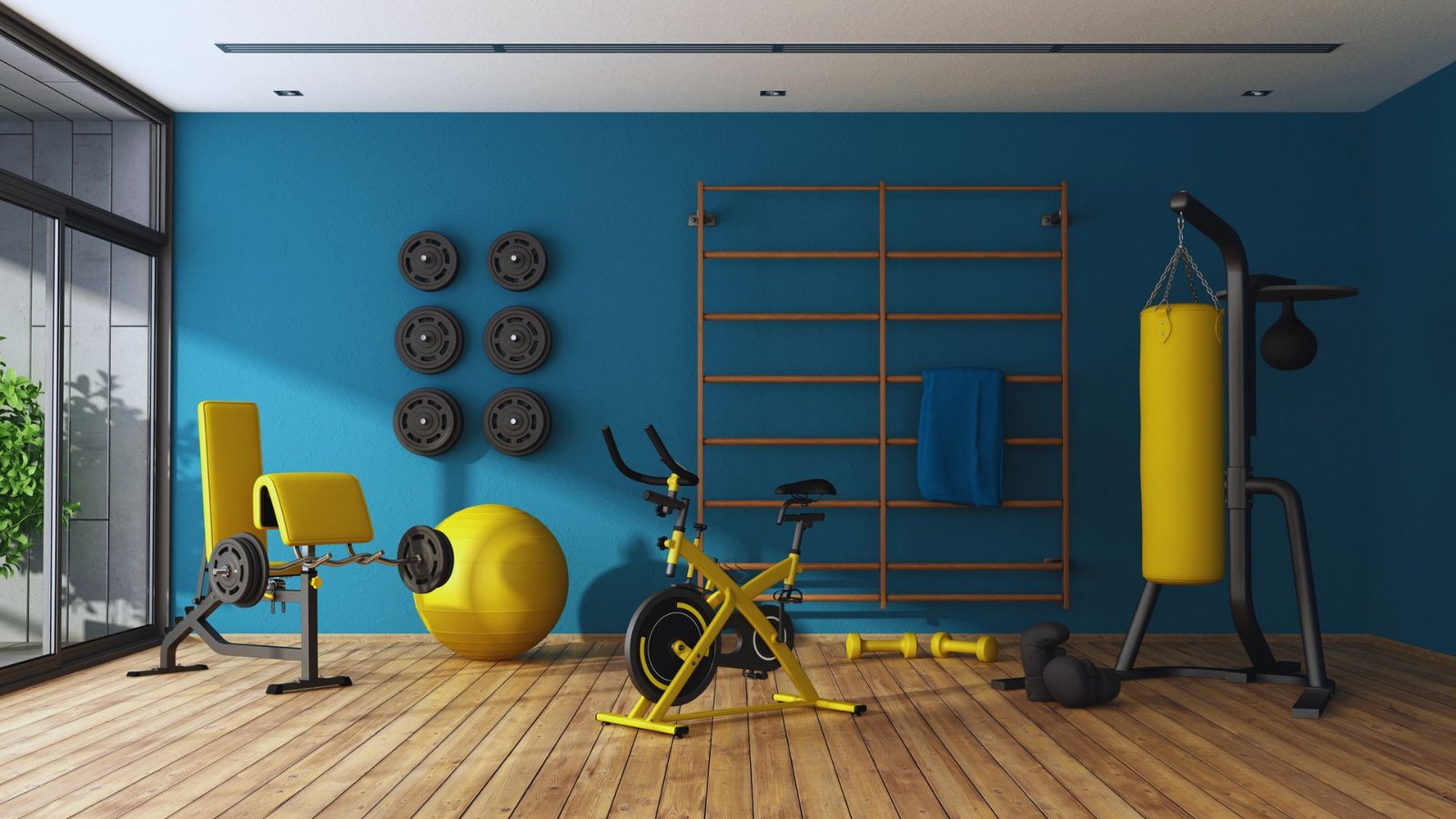
Quotes on the walls, a color scheme that fires you up, custom murals or artwork. Your environment affects your effort. Research consistently shows that your surroundings influence how hard you push in a workout.
Choose colors like red, orange, or deep blue to create energy and intensity in the space.
11. Full-Feature Luxury Basement Gym Concept
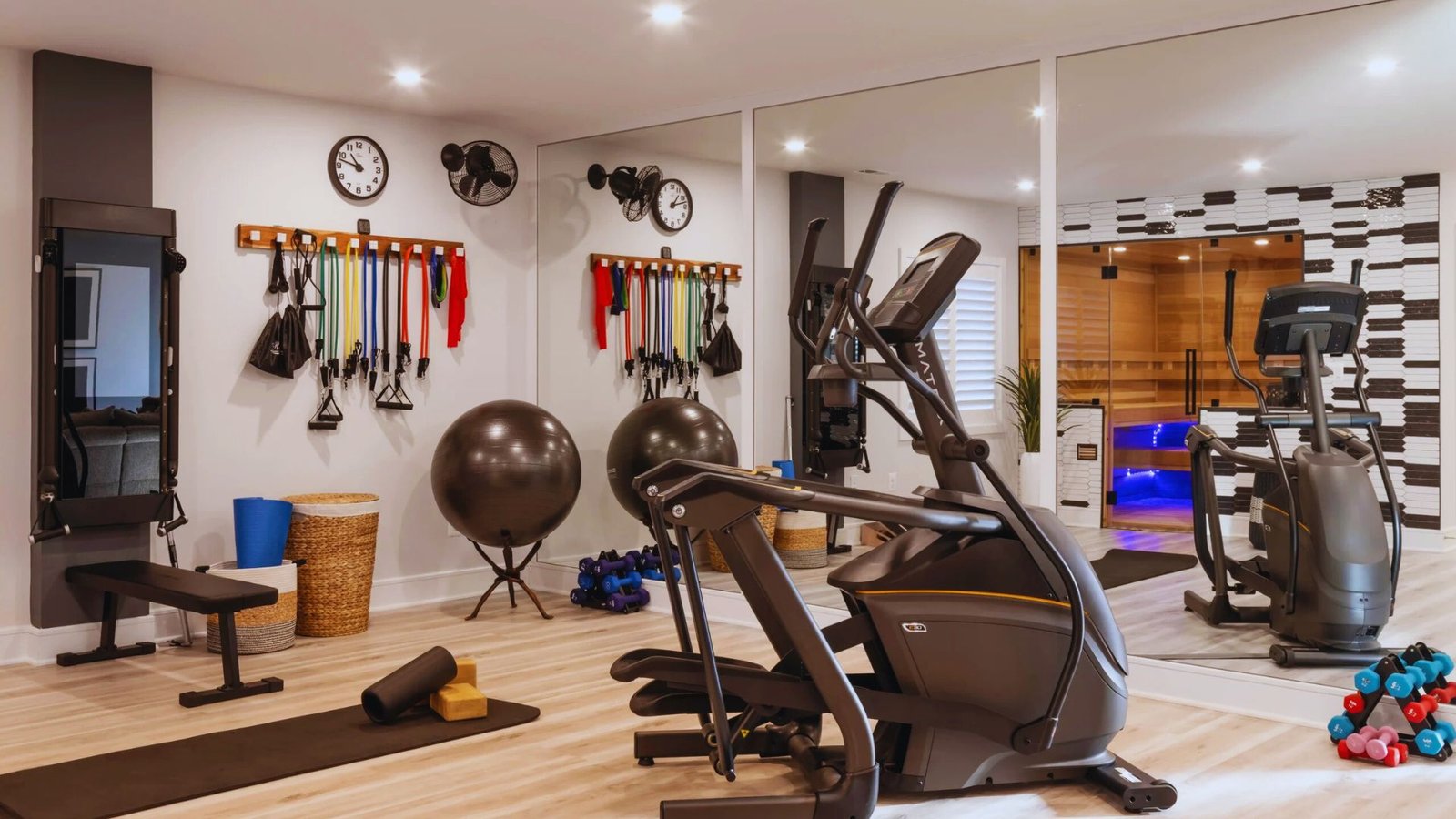
Combine everything with a strength zone, cardio zone, sauna, steam room, smart tech, and custom storage. This is the top-tier build for those going all in.
Budget and planning time are higher here, but the payoff is a space that rivals any private gym facility. If you’re building once and building right, this is the version to aim for.
Core Design Elements of a Luxury Basement Gym
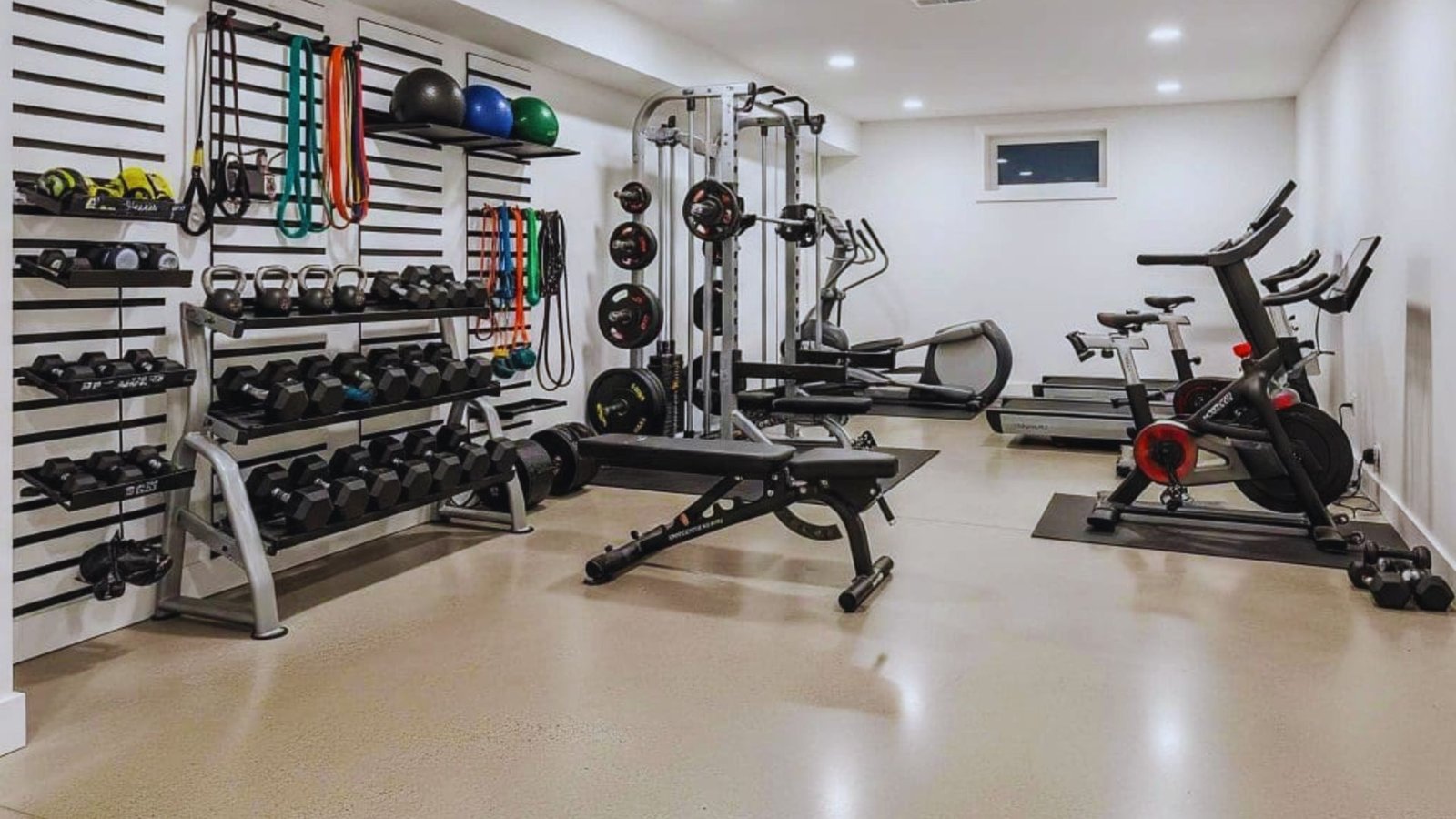
These elements separate a good basement gym from a truly great one.
Flooring, Lighting, and Acoustics
Start with what’s underfoot. High-density rubber flooring protects your subfloor and reduces joint stress during heavy lifts. Foam tiles work well in yoga zones, and vinyl plank adds a clean look to non-lifting areas. Lighting matters just as much.
Overhead LED panels keep the space bright, while recessed lighting adds depth. LED strips or backlit panels around mirrors give the room a polished, focused feel. For sound, acoustic panels cut down echo, and mass-loaded vinyl under the flooring stops noise from traveling through the house.
Smart Tech, Ventilation, and Moisture Control
A high-end basement gym runs on smart systems. App-controlled lighting, built-in screens, and smart mirrors are now common in premium builds. A strong Wi-Fi signal in the basement is not optional. It’s the backbone of everything.
Moisture is the silent problem most people ignore until it’s too late. Basements trap humidity fast. A high-capacity dehumidifier handles the bulk of it, but you also need proper exhaust ventilation to keep air moving and fresh during hard sessions. Get these two things right before anything else goes in.
Luxury Features That Take Your Gym Further
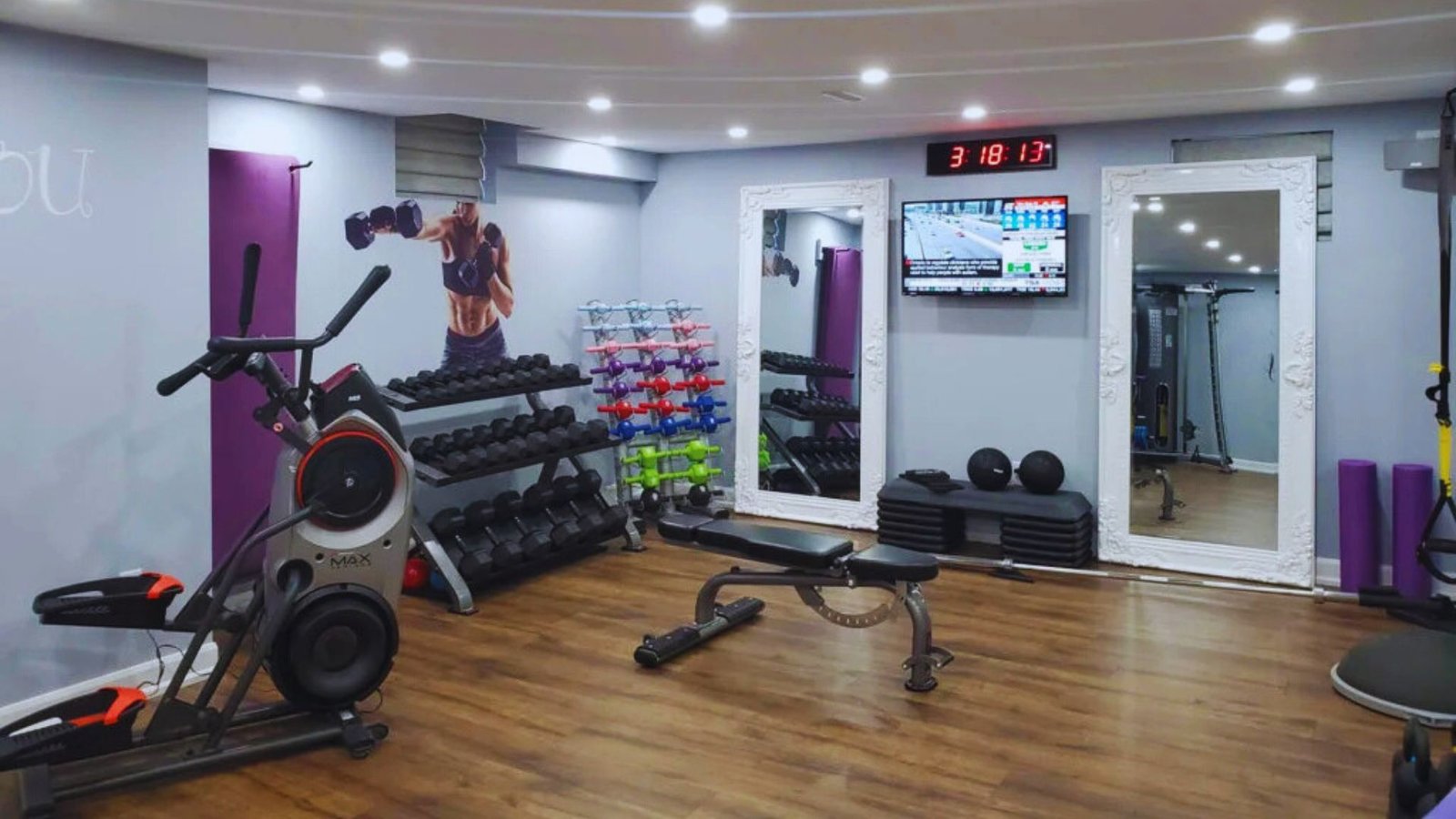
Small upgrades here make the biggest visual and functional difference.
Built-In Storage and Ceiling Treatments
Good storage changes how a gym feels to use. Wall-mounted shelves, built-in cubbies, and cable management systems keep everything off the floor and within reach. A clean gym is easier to train in. Ceilings are the most overlooked surface in any basement build.
Stretch fabric panels or coffered ceilings with LED inserts add a finished, high-end feel that most people don’t expect to find below ground level. It’s the kind of detail that makes the whole space feel intentional.
Surround Sound and Premium Wall Finishes
In-wall or ceiling speakers connected to a smart hub give you full audio control without cluttering your floor space. No extra stands, no tangled wires. Pair that with the right wall treatment and the room comes together.
Textured panels, painted brick, or full mirror walls each create a different feel. Add LED accent strips behind mirrors or along baseboards and the gym stops looking like a basement renovation and starts looking like a space someone actually designed with purpose.
How Much Does a Luxury Basement Gym Cost?
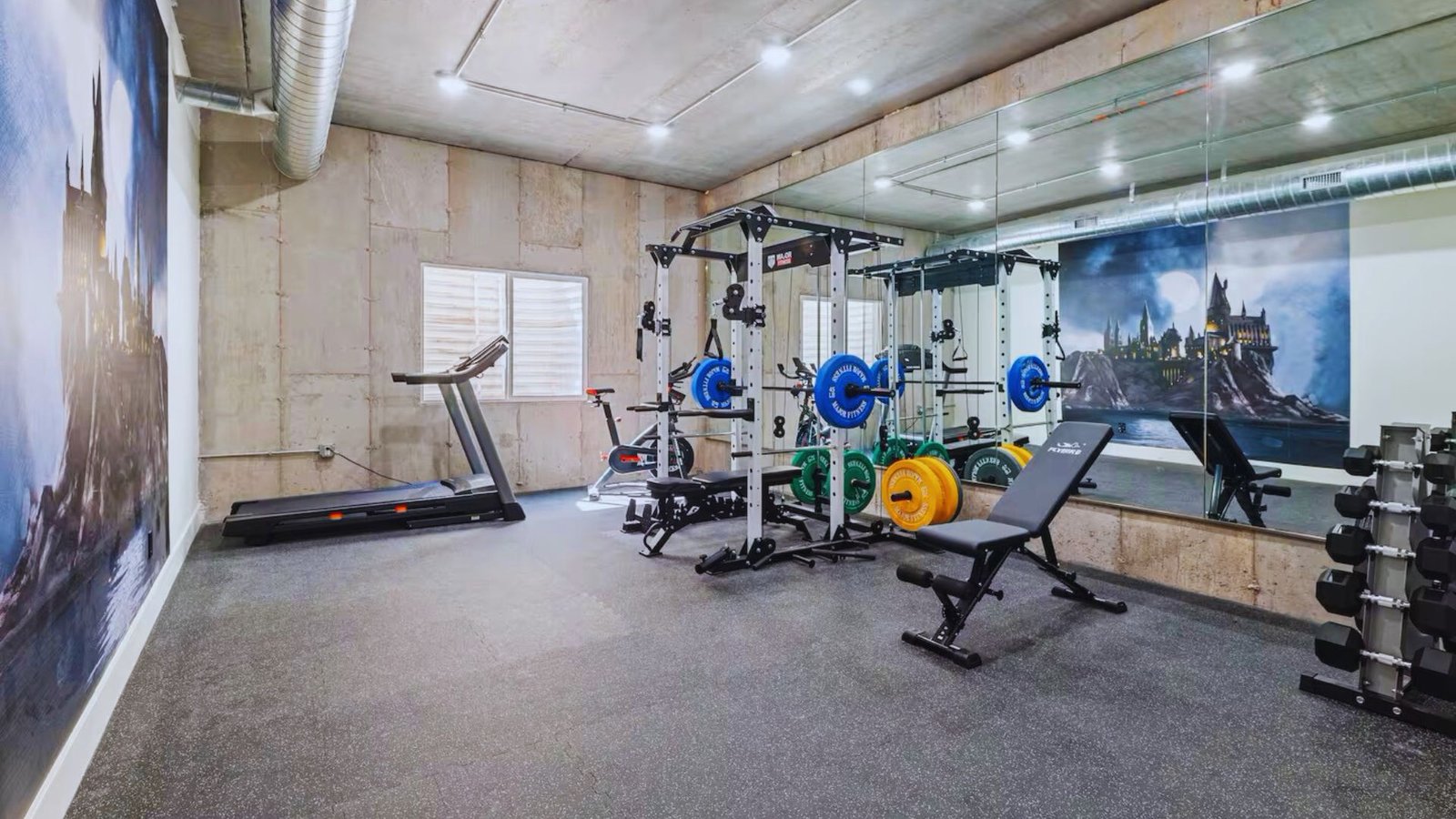
Costs vary widely based on size, features, and finishes.
Here’s a rough breakdown
Mid-level build: (flooring, mirrors, basic lighting, mid-range equipment) $15,000 to $30,000
High-end build: (custom finishes, smart tech, premium equipment) $30,000 to $60,000
Ultra-premium build: (sauna, steam room, full AV system, bespoke design) $60,000 and up
Where to invest first: Flooring and ventilation give the best return. They protect your health and your home structure. Lighting comes next. Equipment last, since you can always add more later.
Expert Planning Tips for Your Luxury Basement Gym
Plan this before breaking ground and you’ll avoid expensive surprises.
- Most exercises need at least 8 feet of ceiling clearance. Olympic lifts need more. Check load-bearing walls before placing heavy racks.
- Seal walls and floors before any finishing work goes in. One water leak can wipe out thousands in flooring and equipment.
- Run extra electrical circuits early. Treadmills, saunas, and smart systems all draw heavy power.
- If you want a cold plunge, bathroom, or wet area, rough-in the plumbing before walls close up.
- Leave open wall space and keep floor areas flexible. Your equipment needs will change over time.
- A rigid layout will limit you later. Build with room to grow from the start.
Conclusion
Building a luxury basement gym is one of the best home decisions I’ve seen people make, and honestly, one I’d make myself without hesitation.
What starts as an empty basement becomes a space you actually look forward to every single day. Pick two or three ideas from this list that fit your goals and budget.
Start simple, plan smart, and build in phases if needed. Your future self will thank you for it. Got a question or a design idea you love?
Drop it in the comments. I’d really love to hear what you’re planning to build.
Frequently Asked Questions
What is the minimum ceiling height needed for a luxury basement gym?
Most fitness activities need at least 8 feet. Overhead lifts or tall cardio machines may need up to 9 or 10 feet for safe use.
Do I need a permit to build a basement gym?
It depends on your local building codes. If you’re adding electrical, plumbing, or structural changes, a permit is usually required.
How do I control moisture in a basement gym?
Use a high-capacity dehumidifier, seal all walls and floors, and install proper exhaust ventilation. Check moisture levels before installing any flooring.
What type of flooring is best for a luxury basement gym?
Dense rubber flooring works well for lifting zones. Sprung wood or foam tiles suit yoga and low-impact areas. Vinyl plank adds a clean look to non-training sections.
Can a basement gym increase my home’s resale value?
Yes. A finished, well-equipped basement gym is a strong selling point. It adds livable square footage and appeals to health-focused buyers.